
Why this story matters: In a world where it is easy to feel overwhelmed by the scale of our problems, stories of localized innovation and community-driven success provide a grounded, realistic roadmap for broader progress.
Quick summary: This story highlights recent developments related to leisure, showing how constructive action can lead to meaningful results.
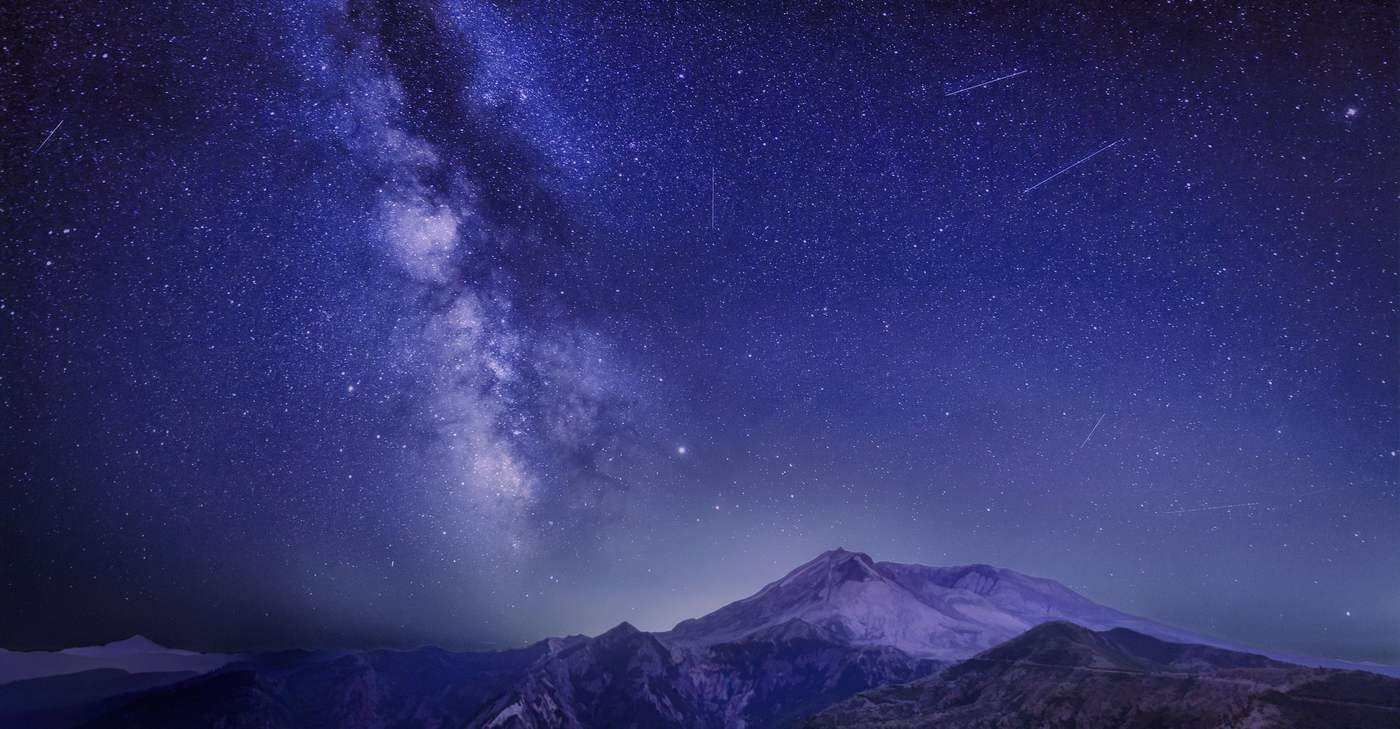
With plenty to see across the firmament this month, one event surely stands out for stargazers: when 2 meteor showers bombard the sky over the last nights of July.
The first is the Southern Delta Aquariids, and though they can be seen as early as July 12th, their peak display will come on July 30th/31st. On these nights one can expect to see 20 shooting stars per hour.
Peaking at the same time are the Alpha Capricornids, producing a more modest 5 shooting stars per hour, but are known for bright, streaking fireballs.
These Aquariids can be seen best in the Southern Hemisphere, but are visible in the North—the farther south the better. However the featured image above was taken in Washington state. The Capricornids can be seen well across both.
The only problem is that the moon, though waning, will be very bright and large that night, meaning that some of the gentler meteors won’t be seen. National Geographic recommends that one should look 40 degrees away from the radiant point—the constellation where it appears the shooting stars emanate from.
If conditions aren’t ideal, consider July 11th and 17th, two dates when the beauty of a crescent moon will line up with Venus, and separately with Mars and the so-called Seven Sisters, also known as the Pleiades.
Two hours before sunrise, on the morning of July 11th, the crescent moon will form a triangle with the Pleiades in the east, with Mars sitting just a few finger widths away.
The Pleiades are beautiful to view with a simple pair of binoculars, but if you’re having trouble spotting the cluster of 7 tightly packed asterisms, try using your peripheral vision—a neat trick for identifying things in the dark.
Two hours after sundown on July 17th, look to the west to see the crescent moon sitting just a few degrees below a shining Venus—one of the brightest objects in the evening sky.
BluAZ.com curates positive and solution-focused stories from trusted sources around the world.


 Why this story matters: In an era where the digital landscape is often flooded with polarizing and negative headlines, stories like this se...
 Mexico Bans Captive Marine Mammals in Entertainment In a groundbreaking move, Mexico’s Congress unanimously approved a reform to the General...
 Why this story matters: Innovation isn't just about the latest gadget; it's about making life better for everyone. This story highl...
 Why this story matters: Behind the high-level statistics and political debates, there are real people making a real difference. This articl...
 Why this story matters: We live in a time that often emphasizes our differences, but stories of community and collaboration remind us of ou...
 Why this story matters: In a world where it is easy to feel overwhelmed by the scale of our problems, stories of localized innovation and c...
 Why this story matters: In this week’s highlight of positive developments, we look at a story that reminds us that progress is a choice we ...


Please be good and do not spam. Thank you.