
Why this story matters: Not every step forward requires a loud announcement. This story highlights the kind of steady, under-the-radar progress that forms the foundation of a healthier and more compassionate society.
Quick summary: This story highlights recent developments related to animals, showing how constructive action can lead to meaningful results.
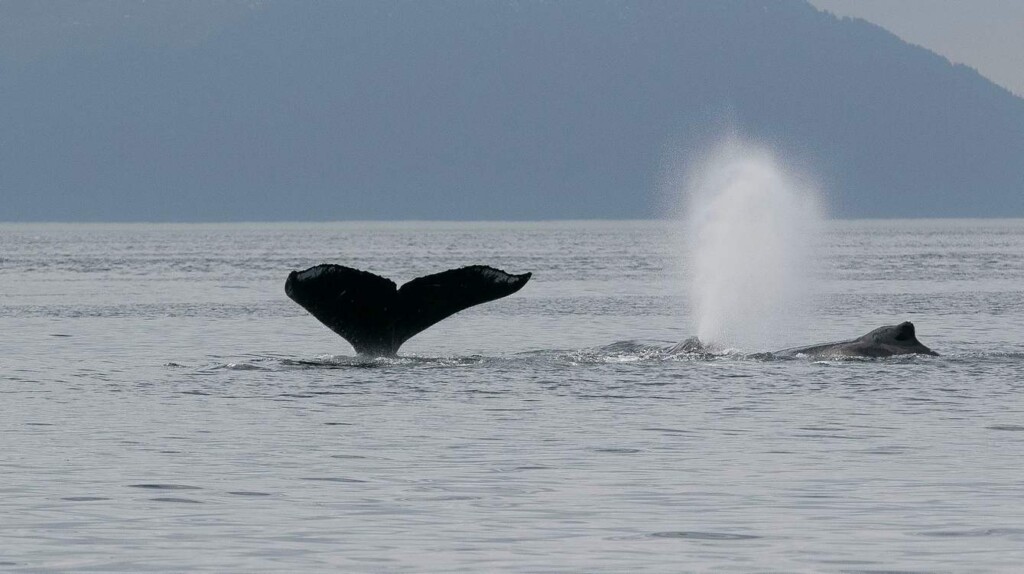
Scientists in California are using heat-sensing AI to save grey whales transiting through San Francisco Bay.
More and more sightings of grey whales, a medium size baleen that can grow to between 40 and 50 feet, are being recorded in the bay, and conservationists are eager to develop methods to more consistently keep them safe from ship strikes—one of the largest causes of whale mortality.
To that end they are employing artificial intelligence to instantly identify the animals’ heat signatures and broadcast that data to passing ships.
“The problem has been getting worse,” Dr. Douglas McCauley, the director of the Benioff Ocean Science Laboratory told CBS News. “This is a problem we can solve right now, that this new data and the community came around it can solve.”
CBS San Fran reported that a group of marine mammal experts gathered in the city to launch Whale Spotter. The first of these devices was put on Angel Island, and the second on a routine transit ferry to Vallejo
“About an hour after plugging it in, we saw 180 blows,” said Dr. McCauley. “That’s not 180 whales, but a handful of whales being active in the bay. It blows, it’s a warm breath so the thermal sensing system sees the heat of the breath against the cold ocean.”
Those heat signatures are then uploaded to a digital map which mariners can access almost immediately and ensure their path of navigation will miss the whales.
The Benioff Laboratory should be able to know within a few months if the devices are leading to fewer whale deaths. Not every new method for preventing ship strikes does—as evidenced by the continuing need to advance methods of detection for humans and deterrence for whales.
GNN has previously reported on methods to reduce ship strikes, including through powerful imaging satellites in the North Atlantic, and a trio of buoys in the Mediterranean that alerts passing ships to the coordinates of sperm whale clicks.
BluAZ.com curates positive and solution-focused stories from trusted sources around the world.


 Why this story matters: In an era where the digital landscape is often flooded with polarizing and negative headlines, stories like this se...
 Why this story matters: We live in a time that often emphasizes our differences, but stories of community and collaboration remind us of ou...
 Why this story matters: Innovation isn't just about the latest gadget; it's about making life better for everyone. This story highl...
 Why this story matters: Behind the high-level statistics and political debates, there are real people making a real difference. This articl...
 Mexico Bans Captive Marine Mammals in Entertainment In a groundbreaking move, Mexico’s Congress unanimously approved a reform to the General...
 Why this story matters: In a world where it is easy to feel overwhelmed by the scale of our problems, stories of localized innovation and c...
 Why this story matters: The intersection of technology and environmental stewardship is producing some of the most exciting news of our gen...


Please be good and do not spam. Thank you.