
Why this story matters: In an era where the digital landscape is often flooded with polarizing and negative headlines, stories like this serve as a vital reminder that meaningful, quiet progress is unfolding across the globe every single day.
Quick summary: This story highlights recent developments related to animals, showing how constructive action can lead to meaningful results.
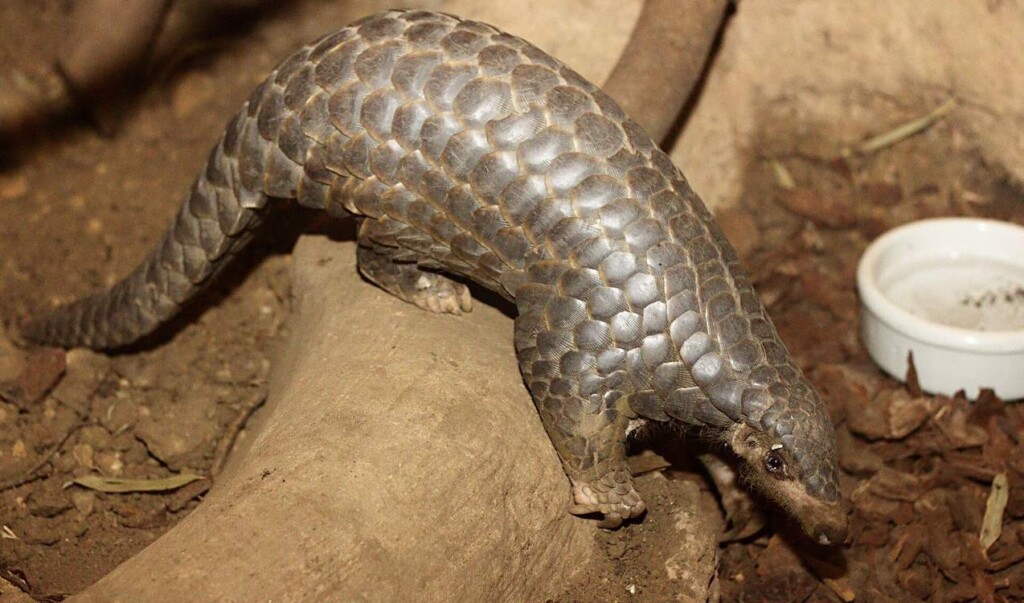
For the Chinese subspecies of the world’s most trafficked wild animal, the darkest days may be in the rearview mirror.
The Chinese tree pangolin, a Critically-Endangered species according to the IUCN, is steadily growing in population size 6 years after China placed the animal under first-class national protection measures.
In Guangdong Province, the wild population is estimated at 1,778, which if divided across its distribution areas, amounts to 0.33 pangolins per square kilometer. This is a marked improvement from earlier this century when the population plummeted to zero in areas of counties Meizhou, Huizhou, and Heyuan.
The pangolin is one of the last surviving groups of scaley mammals, and the 9 recognized species are located across tropical regions of Asia and Africa.
Comprehensive monitoring in Guangdong has been established by the Chinese Forests and Grasslands Administration, with 690 infrared cameras activated in 2020 across its remaining known locations.
Since then, reports China Daily, certain areas of habitat have improved, and the Administration also established the first research and breeding center for Chinese tree pangolins in the country in Guangzhou, the provincial capital.
There are now 35 distribution areas for the Chinese pangolin in the country, which are included in a national list of “key terrestrial habitats.”
OTHER POACHING DECLINES: Zero Rhinos Poached in India’s Stronghold for the Second Year on Record
Chinese traditional medicine has used the animal’s scales for millennia as a supposed treatment.
The country’s population of animals stood at around 64,000 individuals in 2000, but this fell more than 80% since then, mostly from poaching for this medicinal use. Like rhino horn and elephant ivory, Chinese traditional medicine has a lot to answer for over the declines in the pangolin.
GOOD NEWS FOR PANGOLINS:
30,000 Animals Rescued from Illegal Captivity in the Largest Wildlife Trafficking Raid in History
The Chinese authorities seem to be both well aware of this, and frank about the animal’s precarious existence. Pangolin species across the world are poached for export into China and Vietnam, but the first step to protecting the group across the world is to protect the member you have at home, and though China has a spotty track record of preventing its native wildlife from becoming extinct, conservation authorities have at least gotten to this animal earlier than other species.
BluAZ.com curates positive and solution-focused stories from trusted sources around the world.


 Jane Goodall's Most Iconic Quotes On Hope & Making A Difference Dr. Jane Goodall passed away at the age of 91. "Dr. Goodall...
 Why this story matters: Behind the high-level statistics and political debates, there are real people making a real difference. This articl...
 Why this story matters: The intersection of technology and environmental stewardship is producing some of the most exciting news of our gen...
 Mexico Bans Captive Marine Mammals in Entertainment In a groundbreaking move, Mexico’s Congress unanimously approved a reform to the General...
 Why this story matters: This uplifting update reminds us that even in the face of significant obstacles, the human spirit remains resilient...
 Why this story matters: This piece serves as a constructive counterpoint to the prevailing sense of pessimism, offering readers a well-reas...
 Why this story matters: This article cuts through the sensationalism to provide a clear, constructive look at a project that is actually wo...


Please be good and do not spam. Thank you.