
Why this story matters: This story offers a refreshing and deeply necessary look at how practical problem-solving and human ingenuity can intersect to create tangible, positive change in areas that truly matter to our communities.
Quick summary: This story highlights recent developments related to science, showing how constructive action can lead to meaningful results.
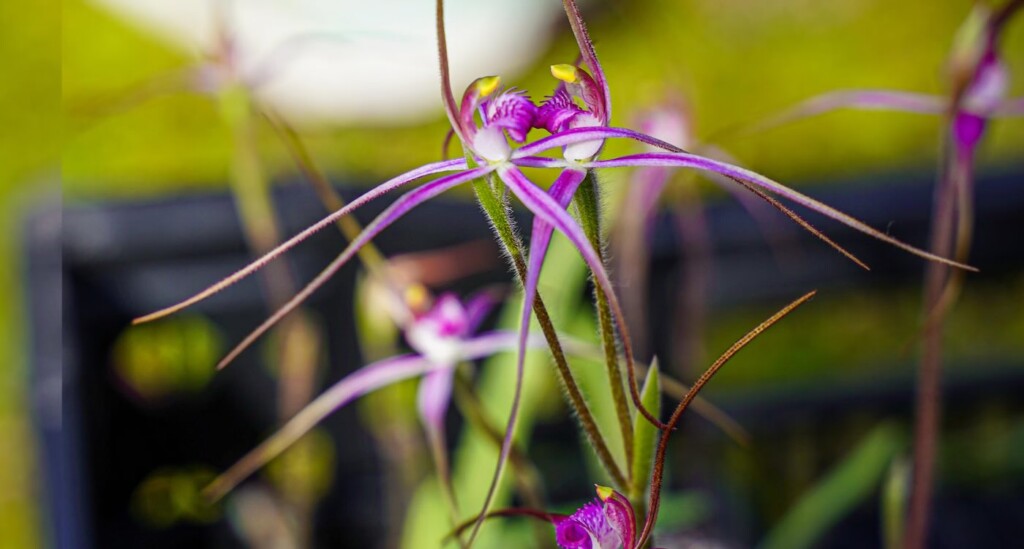
There are many orchids at risk of extinction in Australia alone, few more than this rosella spider orchid.
Thanks to a dedicated team of volunteers however, the Royal Botanic Gardens in Victoria actually possess a nursery with twice as many orchids as were estimated to exist in the wild when they started, providing a stable foundation for the flower to reestablish itself.
“The orchid conservation team at the Botanic Gardens [in Victoria] have something like 500 species in propagation,” Alex McLachlan, a research scientist at the gardens, told ABC News AU.
“There’s about 8 threatened species, including non-orchid species, that are going back out into the wild this year.”
McLachlan and his colleagues describe Australia’s orchids as a “cryptic” bunch. They keep a “low profile,” often appearing as just a single green leaf like a blade of grass, if appearing above ground at all. When they flower, they’re often relying on several different cues, and they may be designed entirely to attract a single species of wasp, bee, fly, or beetle.
Each one offers a riddle that has to be solved before the plant can be saved.
Despite being native to New South Wales and Victoria states, there are only 4 locations known to contain this spider orchid, and together they add up to something not much larger than a suburb of Melbourne.
In 2000, just 120 wild rosella spider orchids were recorded. Thankfully, in 2023, that number had increased 5-fold, but not enough so that one good wildfire wouldn’t end the species’ existence.
McLachlan has over 500 plants in his nursery once waiting to be transplanted to a secret site where the bees are known to live. Getting to this point required years of hard work, as the orchids require a specific fungal species to germinate. They have symbiotic relationship with this microscopic fungus, and cannot be started from seed without it.
Not knowing the romance of the soil, the fungi, and the seeds, McLachlan and his team had to do it by hand, introducing seeds and fungal spores in a petri dish.
AUSTRALIA’S PLANTS: Aboriginal Elders Lead Prescribed Burn–and Rare Orchids Appear by Thousands
“The seedlings will form, and then they’re kept in our growth room back at Cranbourne,” he told ABC. “And they’ll stay in their little plates for about 3 months until they’re big enough to then go up into flasks.”
It will be another year until they’re ready to be put into soil. Recently, in July, volunteers and scientists were able to do just this, after 3 years of careful laboratory horticulture.
GETTING A HELPING FROND: Rare British Plant Makes Extraordinary Comeback from Brink of Extinction
ABC News described the orchids of Australia as enjoying “cult” like followings, which meant that McLachlan and his colleagues had no shortage of offers for help as they trucked the young orchids out to privately-managed land and begin to stick them into the ground with cages over top to protect them.
It’s “the fun bit” but also bittersweet, as the team knows how many plants need this kind of helping hand. The good news, however, is that there are many hands ready to help with this special little flower and others like it.
BluAZ.com curates positive and solution-focused stories from trusted sources around the world.


 Why this story matters: In an era where the digital landscape is often flooded with polarizing and negative headlines, stories like this se...
 Mexico Bans Captive Marine Mammals in Entertainment In a groundbreaking move, Mexico’s Congress unanimously approved a reform to the General...
 ‘In Goats We Trust’ When Mount Etna in Sicily rumbled this spring, news outlets around the...
 Why this story matters: We live in a time that often emphasizes our differences, but stories of community and collaboration remind us of ou...
 Why this story matters: Data-driven progress often moves at a pace that is too slow for breaking news, but its impact is far more permanent...
 Why this story matters: This story offers a refreshing and deeply necessary look at how practical problem-solving and human ingenuity can i...
 Why this story matters: While we must remain clear-eyed about the challenges that remain, it is equally important to acknowledge the victor...


Please be good and do not spam. Thank you.