
Why this story matters: In a world where it is easy to feel overwhelmed by the scale of our problems, stories of localized innovation and community-driven success provide a grounded, realistic roadmap for broader progress.
Quick summary: This story highlights recent developments related to sandi mri brain structure, showing how constructive action can lead to meaningful results.
BY THE OPTIMIST DAILY EDITORIAL TEAM
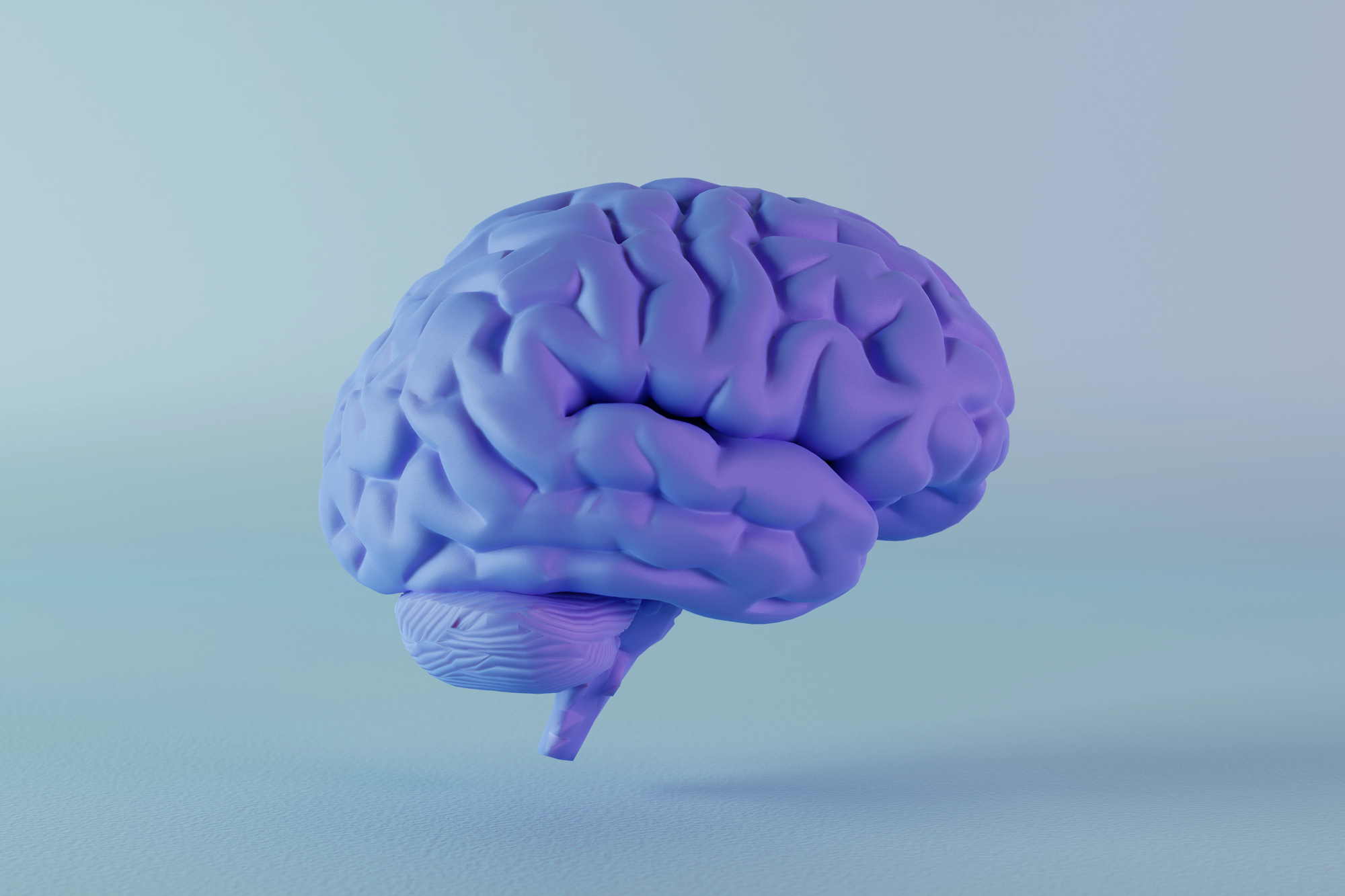
Did you know that every time the brain learns something, it changes physically? A study in PLoS Biology is the first to track exactly what those changes are, and found two separate processes happening at different speeds and in different locations, and that the tool most researchers have been using couldn’t tell them apart.
Standard diffusion tensor imaging (DTI) tracks water movement through brain tissue but collapses everything into one signal. “DTI captures a single, global signal: it can tell you that a change in one region lasts longer than in another, but not what underlies it,” said Valeria Della-Maggiore, who led the study from the National University of San Martin and the University of Buenos Aires. Her team used ultra-high-gradient MRI combined with a model called SANDI (Soma and Neurite Density Imaging), which separates the signal by cellular compartment: cell bodies, neurites, and surrounding fluid.
The experiment
Twenty-nine healthy adults, ages 18 to 36, learned a five-digit finger-tapping sequence with their non-dominant left hand. They practiced 15 blocks of 12 sequences with 25-second rests between blocks, about 15 to 20 minutes total. Scans were taken before the session, 30 minutes after, and 24 hours later.
Two processes, two timescales
The 30-minute scans showed a temporary rise in cell body density across all brain regions involved in the task: the hippocampus, primary motor cortex, posterior parietal cortex, and precuneus. By 24 hours, those had returned to baseline. The researchers interpret this as a housekeeping response: intense neural activity disrupts the ion balance in cells, water flows in to compensate, and the cells swell temporarily.
The second change was more specific. At 24 hours, neurite density (dendrites and axons) had increased in just two regions: the precuneus and the posterior parietal cortex. The change held, and it correlated with how much each person improved. The hippocampus, engaged early in learning, showed no lasting structural change at all. Whatever long-term rewiring happened, it happened in the cortex.
“When you learn a new skill, two processes of different spatial and temporal dynamics take place in your brain at the cellular level,” Della-Maggiore said. “One is transient and occurs at the level of cell bodies. The other is persistent, confined to the regions specifically involved in learning.”
Standard DTI would have read both as one. The temporary swelling would have disappeared into the noise.
Della-Maggiore said the SANDI method could extend to studying neurodegeneration, aging, and development, anywhere the difference between adaptive change and damage matters and can’t currently be measured directly in living humans.
Source study: PLoS Biology– Learning engages transient and sustained cellular mechanisms in the human brain
Did this solution stand out? Share it with a friend or support our mission by becoming an Emissary.
BluAZ.com curates positive and solution-focused stories from trusted sources around the world.


 Why this story matters: We live in a time that often emphasizes our differences, but stories of community and collaboration remind us of ou...
 Mexico Bans Captive Marine Mammals in Entertainment In a groundbreaking move, Mexico’s Congress unanimously approved a reform to the General...
 Why this story matters: Not every step forward requires a loud announcement. This story highlights the kind of steady, under-the-radar prog...
 Why this story matters: While it is easy to become cynical in an age of instant, often negative information, stories like this prove that t...
 Why this story matters: We live in a time that often emphasizes our differences, but stories of community and collaboration remind us of ou...
 Why this story matters: Innovation isn't just about the latest gadget; it's about making life better for everyone. This story highl...
 Why this story matters: Acts of kindness and professional integrity often go unrecorded, but their ripple effects are immense. This article...


Please be good and do not spam. Thank you.