
Why this story matters: It is often said that bad news travels fast, but good news has a deeper impact. This story explores a quiet victory that demonstrates how much we can achieve when we focus on building up rather than tearing down.
Quick summary: This story highlights recent developments related to oral cancer detection, showing how constructive action can lead to meaningful results.
BY THE OPTIMIST DAILY EDITORIAL TEAM
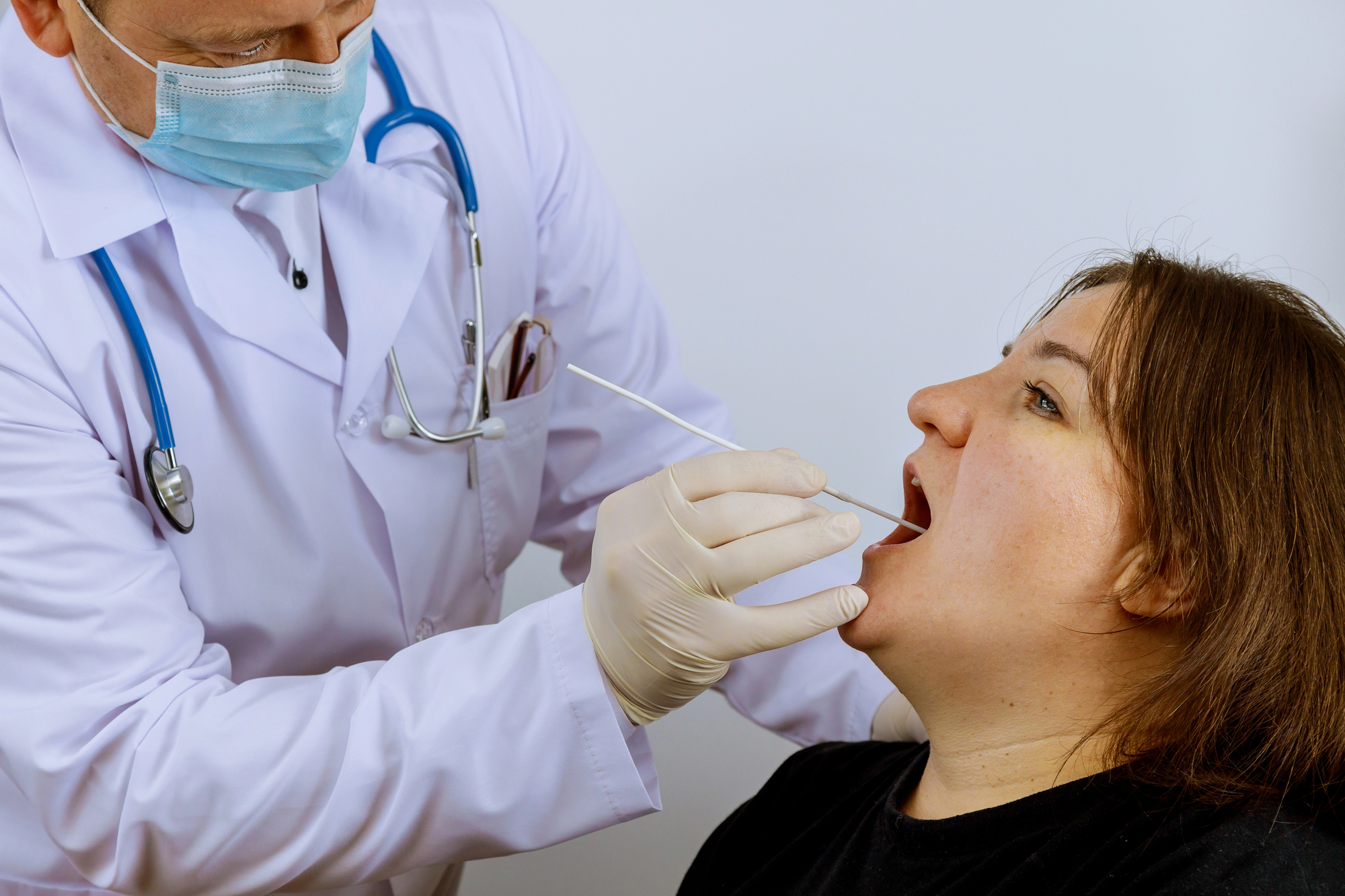
A brush swab of the mouth. Four genes. Results in under an hour. Researchers from Queen Mary University of London, working with partners in India, have shown that this simple approach can match the diagnostic accuracy of a surgical biopsy, without a scalpel anywhere near the inside of your cheek.
The test is called qMIDS (quantitative Malignancy Index Diagnostic System). In a trial of 545 patients with potentially cancerous mouth lesions, it hit 95.5 percent overall accuracy, with false-positive and false-negative rates each below five percent. The study was published in Biomarker Research.
Why monitoring has been the problem
Oral cancer usually shows up as persistent sores or discolored patches on the lips, gums, tongue, or inner cheeks. Most are benign. The ones that aren’t need to be watched over months or years, which is where current practice falls apart.
Standard biopsies involve a scalpel, painful in an already sensitive area, and when you need multiple over time because the lesion might be progressing, many patients start skipping follow-up. A monitoring protocol that patients avoid isn’t doing the monitoring.
Oral cancer cases have more than doubled worldwide since 1990, as have deaths from it. Lifestyle factors like smoking, alcohol, and HPV infection are implicated. Early detection matters. But not if the tool for catching it is too unpleasant to come back for.
“[This test] gives clinicians a rapid, accurate, and non-invasive way to triage patients, and crucially, it can be repeated,” said Muy-Teck Teh, an oral oncologist at Queen Mary University of London. “That means we can now monitor patients with persistent pre-malignant lesions regularly and systematically and pick up cancers much earlier than we would have been able to before.”
How it works
A brush swabs the suspect lesion, and the sample gets analyzed for mRNA expression from four specific genes linked to oral cancer. A second swab from an unaffected part of the mouth runs as a control. This is the third generation of the qMIDS system; earlier versions had shown promise in large-scale trials, and this study tested whether it could reliably distinguish cancerous lesions from benign ones.
It could, and the team was surprised by the margin. “We were genuinely astonished by the fact that the brush swab test performance is comparable to a microbiopsy,” Teh said. “It suggests that the biological signal captured by these four genes is sufficiently strong and consistent that it can be detected even from the superficial exfoliated cells collected by a brush biopsy.”
The team is working on commercializing the test and expects it could reach clinical use within two years.
Source study: Biomarker Research—INHBA–S100A16 dysregulation enables a non-invasive molecular stratification platform for rapid detection of oral squamous cell carcinoma: results from a large diagnostic case-control study
Did this solution stand out? Share it with a friend or support our mission by becoming an Emissary.
BluAZ.com curates positive and solution-focused stories from trusted sources around the world.


 Jane Goodall's Most Iconic Quotes On Hope & Making A Difference Dr. Jane Goodall passed away at the age of 91. "Dr. Goodall...
 Why this story matters: Behind the high-level statistics and political debates, there are real people making a real difference. This articl...
 Why this story matters: This article cuts through the sensationalism to provide a clear, constructive look at a project that is actually wo...
 Why this story matters: The intersection of technology and environmental stewardship is producing some of the most exciting news of our gen...
 Mexico Bans Captive Marine Mammals in Entertainment In a groundbreaking move, Mexico’s Congress unanimously approved a reform to the General...
 Why this story matters: In this week’s highlight of positive developments, we look at a story that reminds us that progress is a choice we ...
 Why this story matters: This uplifting update reminds us that even in the face of significant obstacles, the human spirit remains resilient...


Please be good and do not spam. Thank you.