
Why this story matters: In the face of daunting global challenges, it is the smaller, localized victories that often provide the most significant inspiration. This story highlights one of those bright spots, proving that positive change is always possible.
Quick summary: This story highlights recent developments related to spain, showing how constructive action can lead to meaningful results.
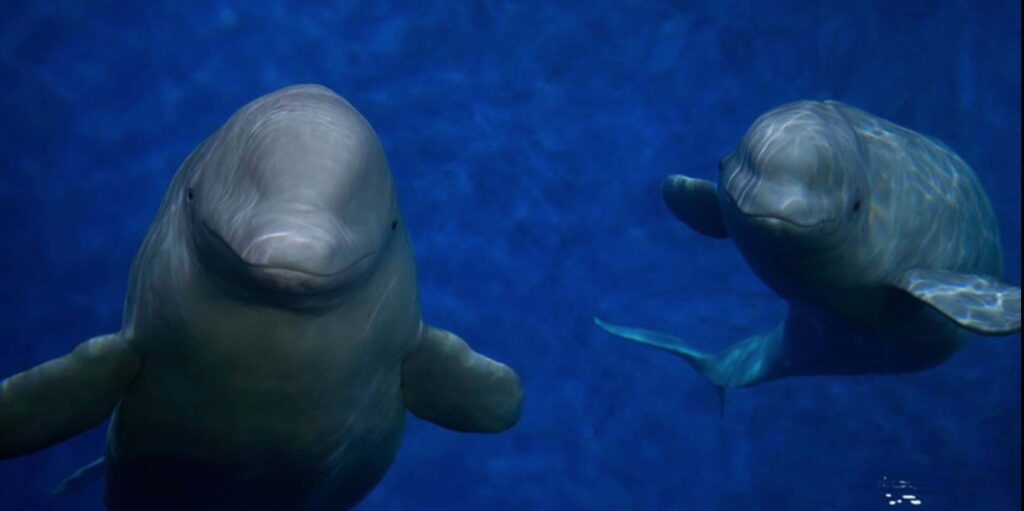
The US and Canadian governments recently approved a plan for the transfer of captive beluga whales which have been stranded for years at a closed theme park.
Shuttered years ago when the captivity for intelligent marine mammals became too controversial, Ontario’s Marineland still contained 30 beluga whales in need of new, more ethical homes.
Located near Niagara Falls, Marineland had no more money to care and feed for the belugas, and even threatened to euthanize them if Canada didn’t approve permits to move the creatures to other aquariums, after a previous attempt to send them to China was rejected.
As a species listed in appendix II of the Convention on the International Trade of Endangered Species, movement of a beluga whale across borders requires a CITES permit for nations to remain in compliance with the treaty pursuant to that convention.
Now, both NOAA (the US Oceanic and Atmospheric Administration) and the Department of Fisheries and Oceans Canada and have approved plans and issued correct permits to move 28 animals to 4 different American aquariums, while Spanish authorities are pending permit issuance for the final 2 to be sent to Oceanogràfic València in Spain, which already houses belugas.
The Georgia Aquarium, Shedd Aquarium in Chicago, and two SeaWorld facilities in San Diego and San Antonio, are now preparing for the animals arrival.
All that’s left is for accredited veterinarians to now clear the whales for travel, and the special whale-transportation to be finalized.
“Once the belugas are cleared for travel by Canadian veterinarians, aquarium experts will accompany the animals to their new homes, where they will be met with diverse seafood to meet their nutritional needs, high quality environments with guaranteed water quality, and onsite medical care should they require it at any time,” the four American aquariums said in a statement.
“This rescue effort will take several weeks to mobilize and complete, and the comfort and safety of the whales remains of the utmost importance. Details will continue to change as this process moves forward, but the aquariums are committed to providing accurate updates along the way.”
Known as the “white whale,” the beluga, a relative of the narwhal, is the only cetacean that naturally produces white skin pigmentation. They’re one of those animals whose skull forms their mouth into a smile, and coupled with their gentle demeanor and graceful swimming skills, they’re an aquarium favorite.
Male belugas in captivity can apparently mimic the pattern of human speech, several octaves lower than typical whale calls.
BEST OF BELUGAS: Kayaker Singing in Hopes of Attracting Beluga Whales Never Imagined They Were Actually Listening
One captive male beluga named No-see caused a diver in a tank with him to surface by imitating orders to get out of the water. Subsequent recordings confirmed that No-see had become skilled at imitating the patterns and frequency of human speech, and intentionally altered his normal methods of vocalization to achieve these sounds.
An animal this intelligent requires dignified and specialized habitat, something Marineland failed to provide, but soon will be awarded to all thirty animals for the rest of their days.
BluAZ.com curates positive and solution-focused stories from trusted sources around the world.


 Jane Goodall's Most Iconic Quotes On Hope & Making A Difference Dr. Jane Goodall passed away at the age of 91. "Dr. Goodall...
 Why this story matters: This piece serves as a constructive counterpoint to the prevailing sense of pessimism, offering readers a well-reas...
 Mexico Bans Captive Marine Mammals in Entertainment In a groundbreaking move, Mexico’s Congress unanimously approved a reform to the General...
 Why this story matters: This article cuts through the sensationalism to provide a clear, constructive look at a project that is actually wo...
 Why this story matters: This story offers a refreshing and deeply necessary look at how practical problem-solving and human ingenuity can i...
 Why this story matters: Statistical trends often tell a different story than the nightly news, pointing toward a world that is gradually be...
 Why this story matters: Real growth doesn't always come with a grand announcement; sometimes it’s the result of years of quiet, steady ...


Please be good and do not spam. Thank you.