
Why this story matters: In an era where the digital landscape is often flooded with polarizing and negative headlines, stories like this serve as a vital reminder that meaningful, quiet progress is unfolding across the globe every single day.
Quick summary: This story highlights recent developments related to blind, showing how constructive action can lead to meaningful results.
As World Cup fever grips the country, Chilangas FC is helping visually impaired women build confidence, friendship and sporting ambition in a game that has too often left them on the sidelines
Swaying her white cane from side to side, Pau, 31, steps off a bus into the noise of Mexico City. Cars surge past, horns blare and rain begins to fall, but the visually impaired mother keeps moving, her six-year-old son Noel holding tightly to her hand.
Several times a week, she makes the two-hour journey across one of the world’s largest cities to train with Chilangas FC, a women’s blind football team that she says has changed her life.
For Pau and her teammates, the commute is more than worth it. Chilangas FC, one of only six women’s blind football teams in Mexico, has become a source of friendship, confidence and independence in a country where many visually impaired women still face pressure to remain at home under the care of relatives.

“Football has changed how I see myself as a blind woman,” Pau says. “Bringing my son with me and knowing I’m setting an example for him fills my heart. I’m showing him that there are no limits.”
Founded in 2022 by coach Wendy del Río, Chilangas FC was created to expand opportunities for visually impaired women in a sport that has long been dominated by men. As blind football has grown in Mexico through men’s leagues, tournaments and national team programmes, women have begun pushing for spaces of their own.
“When we started, there were very few opportunities for blind women,” says del Río. “Many arrived thinking football wasn’t for them because that’s what they had been told their whole lives.”
Training gave the players something many had been missing beyond sport: regular contact with other visually impaired women, and a place where the daily business of navigating the city, work, family and other people’s assumptions did not need to be explained.
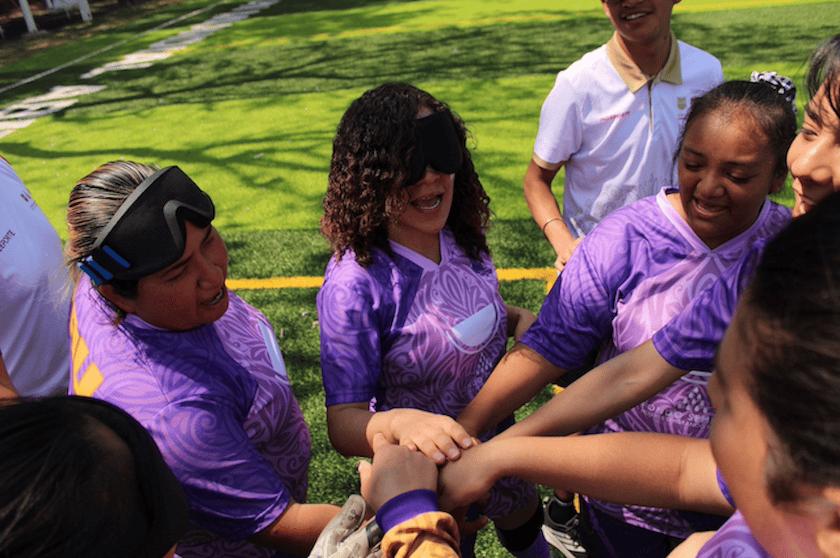
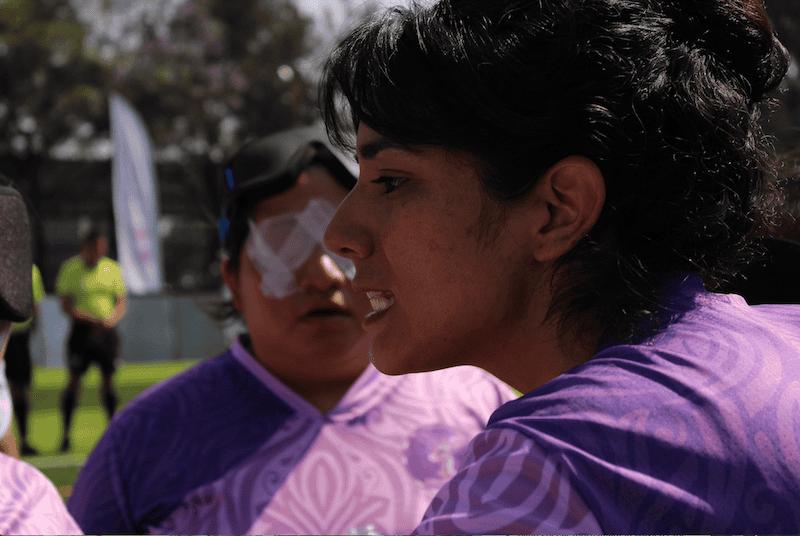
“They’ve become friends, teammates and role models,” del Río says. “Watching their confidence grow has been one of the most rewarding parts of this project.”
Before joining Chilangas FC, much of Pau’s world revolved around work, childcare and getting around Mexico City with a visual impairment. Football has since opened up her life far beyond those routines.
“Before, I felt very alone,” she says. “Now I have teammates who support me, who understand me and who encourage me to keep going.”
Noel often comes with her to training and proudly tells classmates that his mother plays football.
Watching their confidence grow has been one of the most rewarding parts of this project
“He’s happy,” Pau says. “He tells his teachers and our family that his mum plays football. He says he wants to play sports too. It’s beautiful.”
Blind football has existed in Mexico for more than two decades, but opportunities for women have long been limited. During matches, all outfield players wear blackout eye coverings so that different levels of vision are equalised. They play with a rattling ball and rely on voice, trust and spatial memory, guided by teammates, coaches and goal guides stationed around the pitch.
The game is played five-a-side, with four visually impaired outfield players and a sighted goalkeeper. The goalkeeper directs the defence, a coach outside the pitch guides the midfield, and a goal guide behind the opposition net helps attackers line up their shots.
Mexico is co-hosting the World Cup with the US and Canada, and football is everywhere: on television screens, in bars, on shirts, in schoolyards and across the streets Pau crosses to reach training. For Chilangas FC, that national obsession has sharpened a simple question: who gets to be part of the game?
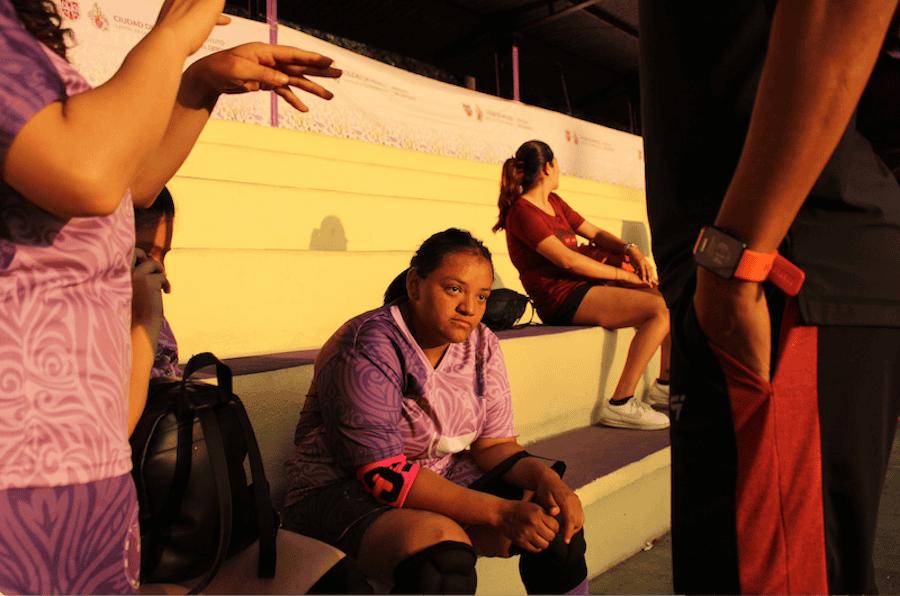
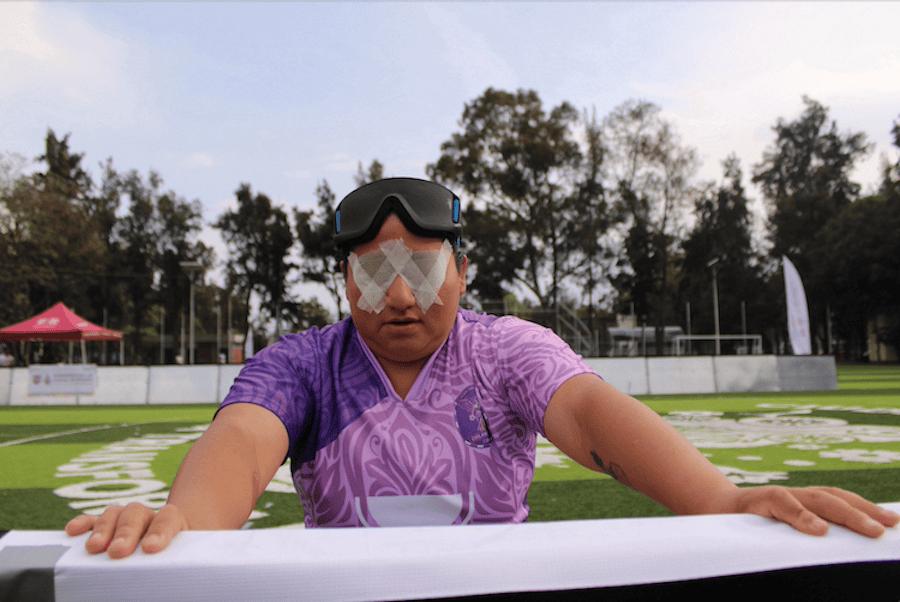
Mexico’s women’s blind footballers are now preparing for another milestone, with players hoping to compete in the Copa América in São Paulo, Brazil, this September. Mexico is trying to become the fourth country in the world, after Brazil, Argentina and Canada, to form a women’s blind football national team.
According to Mexico’s National Institute of Statistics and Geography, around 16 million people in the country live with some form of visual impairment, including more than half a million who are fully blind. Yet women’s blind football remains tiny, with only six teams nationwide and about 45 women playing at an organised level.
To get to Brazil, the team needs to raise 1m pesos, roughly £40,000, to cover flights, accommodation, uniforms, training and food. With no institutional funding in place, a crowdfunding campaign launched by the foundation Fondo Semillas, Fútbol Ciego: Ellas juegan, México dice ¡voy!, has become its financial lifeline.
The sense of belonging Pau describes is shared by many of her teammates. Alexandra, 20, a striker for Chilangas FC, studies at a residential centre for people with visual impairments on the outskirts of Mexico City while pursuing her football ambitions.
Being here feels like having a family. You feel a beautiful responsibility to stay and keep going
“Right now, football is a huge dream for me,” she says. “I want to keep growing as a player. I’m giving everything to training, to strategy, to being a good teammate. Being here feels like having a family. You feel a beautiful responsibility to stay and keep going.”
Stories like Pau’s and Alexandra’s highlight the barriers many visually impaired women continue to face, says Efraín Mora García, president of the Mexican Federation of Sports for the Blind and Visually Impaired.
“Sometimes the barriers are created by us, or by the family itself,” he says. “There are physical barriers and social barriers, but what these women really need is an opportunity.”
Those barriers do not end at the edge of the pitch. Mexico City, del Río says, “isn’t adapted for the visually impaired to get about”, and women travelling alone face additional safety risks. Many players live on the outskirts, making journeys to training long and expensive, while those who need to work weekends can find sport almost impossible to fit in.
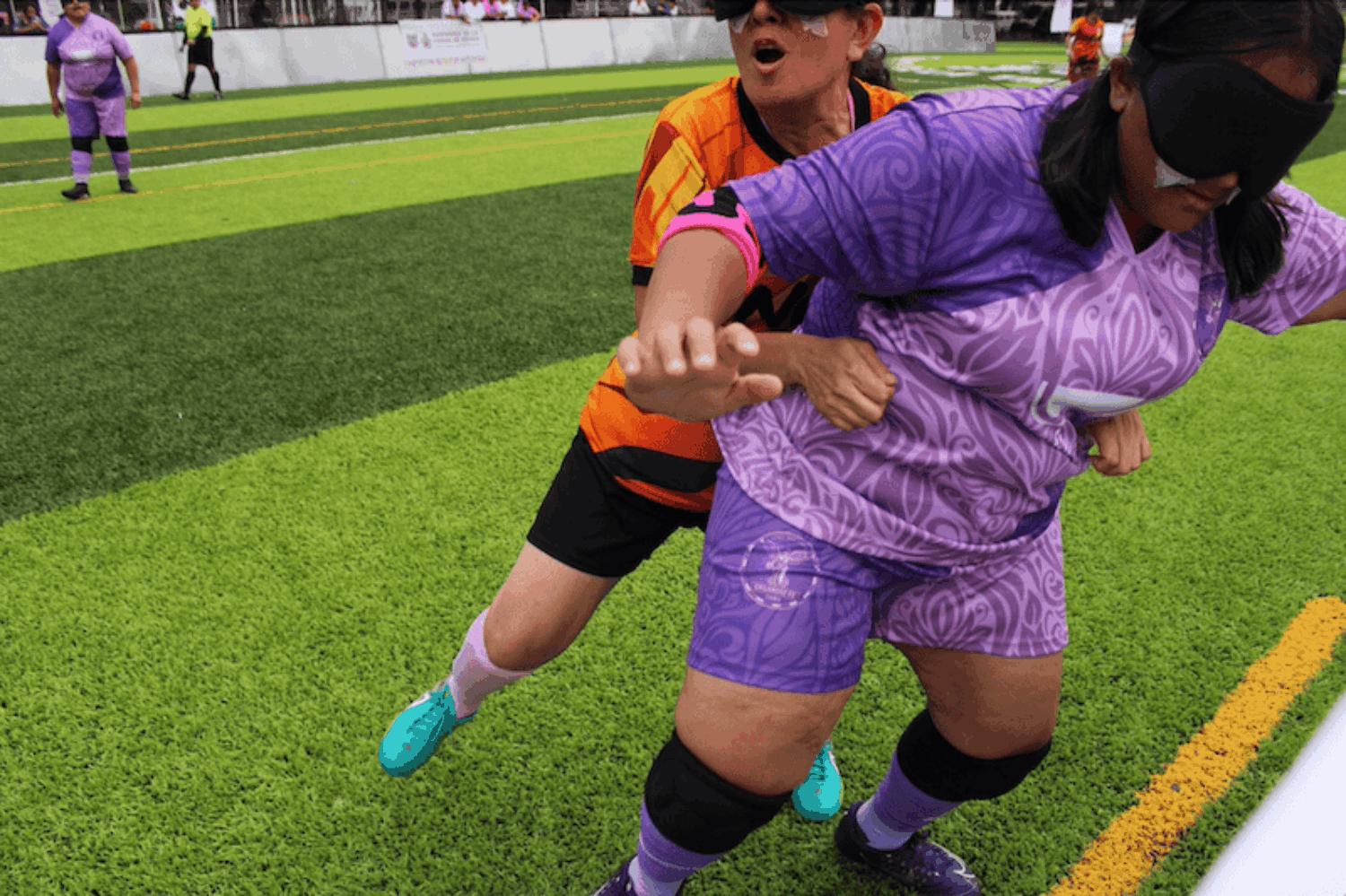
Chilangas FC striker Alexandra Ramírez, 20, attempts to wrestle free from an opposition defender during the Mexican Open Blind Football Tournament
“Playing sport is still a privilege,” del Río says. “You have to have the time, you have to have the resources, and you have to stop doing other activities.”
Without institutional funding, Chilangas FC trains on a public court that it shares with whoever turns up. Del Río has spent months negotiating with Mexico City’s Women’s Secretariat for a dedicated pitch suitable for the sport, while equipment, coaching staff and travel still depend on donations and goodwill.
“What we need is simple: a court designed for our sport, coaches who are paid for their time, and the federation and government to recognise this as a real sport, not a charity project,” she says. “The World Cup is in Mexico, and everyone is talking about football. We just want some of that conversation to include us.”
Even persuading women to try the sport can mean taking on deep-rooted assumptions about disability, danger and who football is supposedly for.
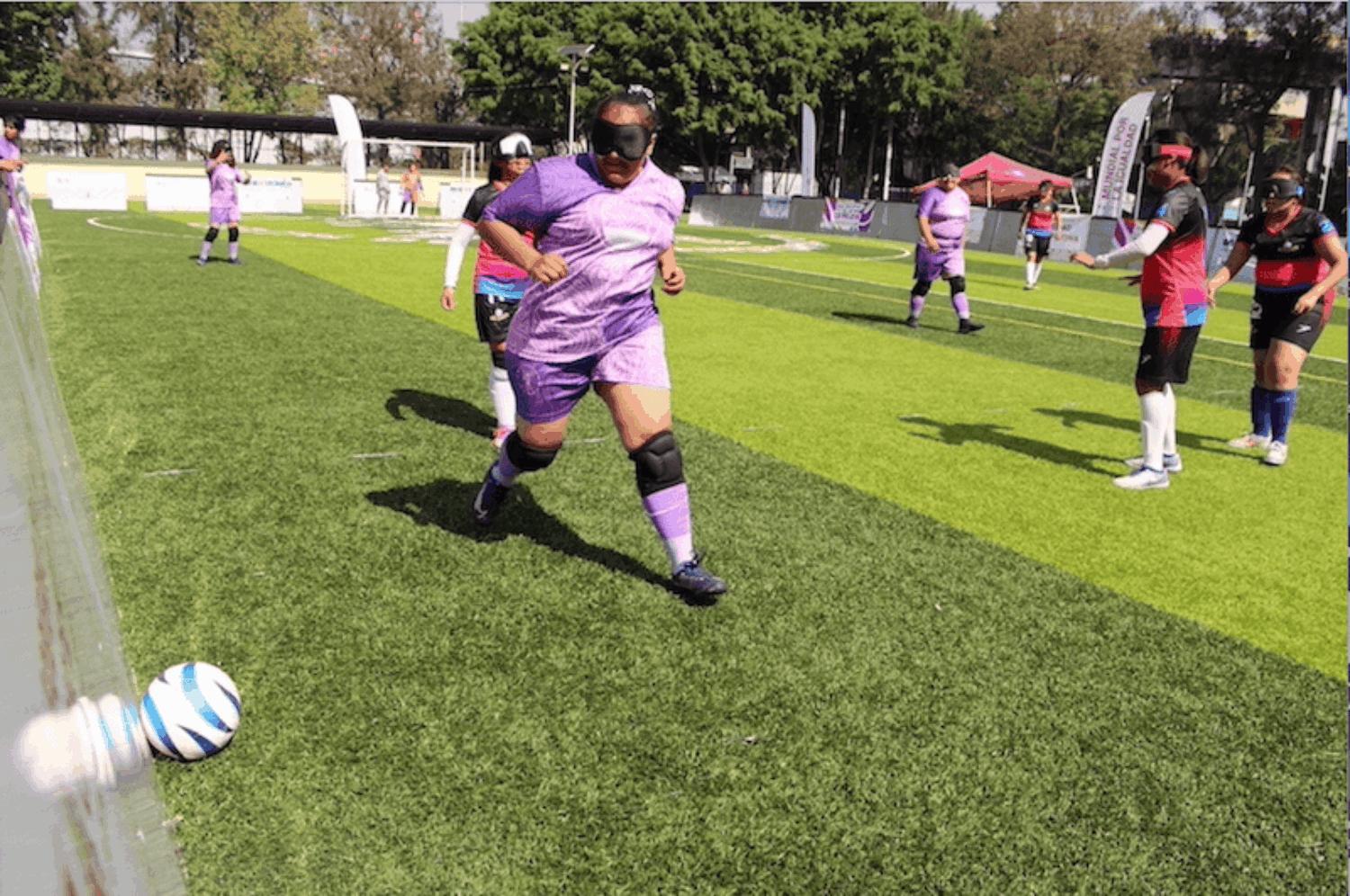
Founded in 2022 by coach Wendy del Río, Chilangas FC was created to expand opportunities for visually impaired women in a sport that has long been dominated by men
“Sometimes I ask the girls, and it’s like, ‘No, I’ll get hit,’ ‘No, it’s too rough,’” del Río says. “Breaking away from those stereotypes (that it’s a conventional, masculine sport) can also be a barrier.”
What the players have built, she says, goes far beyond a football club.
“It becomes a community that embraces you,” del Río says. “And that creates dreams.”
For Pau, one of those dreams has little to do with trophies.
“One of my biggest dreams is for my son to see me play an official match,” she says. “I want to come off the field and have him hug me and say, ‘Congratulations, Mom.’”
For now, Noel keeps making the journey with her across Mexico City, watching from the sidelines as his mother builds a life she once thought was beyond her reach.
Photography by Mark Viales
At Positive News, we’re not chasing clicks or profits for media moguls – we’re here to serve you and have a positive social impact. We can’t do this unless enough people like you choose to support our journalism.
BluAZ.com curates positive and solution-focused stories from trusted sources around the world.


 Why this story matters: We live in a time that often emphasizes our differences, but stories of community and collaboration remind us of ou...
 Why this story matters: This uplifting update reminds us that even in the face of significant obstacles, the human spirit remains resilient...
 Why this story matters: Not every step forward requires a loud announcement. This story highlights the kind of steady, under-the-radar prog...
 Why this story matters: Innovation isn't just about the latest gadget; it's about making life better for everyone. This story highl...
 Mexico Bans Captive Marine Mammals in Entertainment In a groundbreaking move, Mexico’s Congress unanimously approved a reform to the General...
 Why this story matters: Hope is not just a feeling; it is a strategy for moving forward. This article explores a real-world example of how ...
 Why this story matters: The intersection of technology and environmental stewardship is producing some of the most exciting news of our gen...


Please be good and do not spam. Thank you.