
Why this story matters: In this week’s highlight of positive developments, we look at a story that reminds us that progress is a choice we make every day through our actions, our innovations, and our refusal to settle for the status quo.
Quick summary: This story highlights recent developments related to cleans, showing how constructive action can lead to meaningful results.
What if you could ride a boat, completely powered by the sun, that also purified the water you floated upon?
In South Korea, startup Ecopeace is at the forefront of technology that does just that.
It starts with Ecopeace’s Eco-Bot, an autonomous solar-powered boat that uses artificial intelligence to clean floating pollutants and oil spills in real time. It also cleans up excesses of green algae, which can be responsible for the mass deaths of fish and animals and pose health risks to humans.
In addition to this purification technology, the device is also used to collect field data about water quality conditions, which helps operators better understand and manage waterways across lakes, rivers, and reservoirs.
The company has also developed what they call the Eco-Station, which is a fixed water management system — also solar-powered — that gets installed for large-area water purification projects.
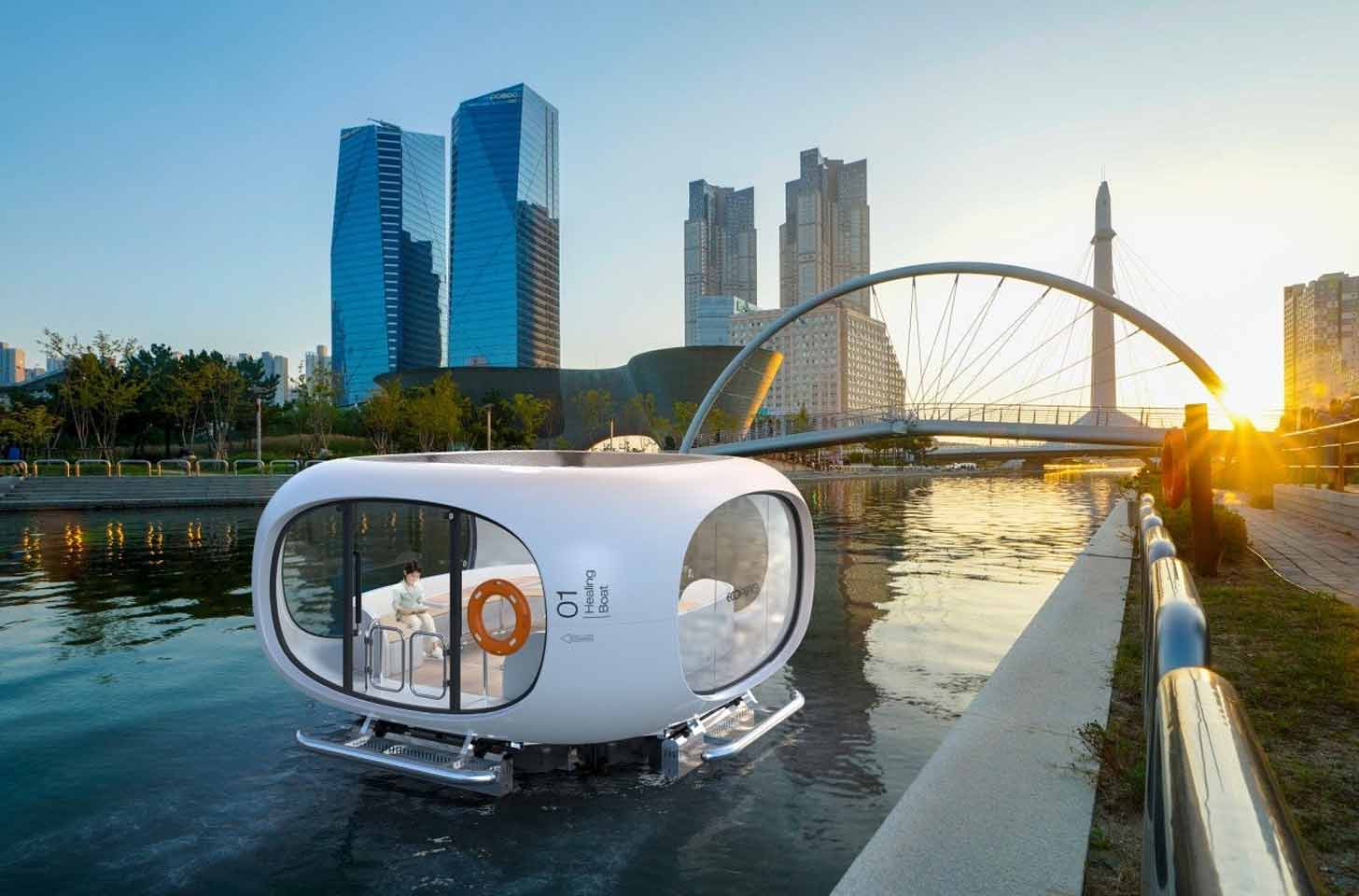
But perhaps its most exciting development is the Healing Boat, an autonomous ferry that can transport people across water, while purifying that water in the process.
The Healing Boat can purify up to 100 tons of water per day, according to Ecopeace, and can accommodate up to eight passengers per ride.
Ecopeace describes it as “a model that combines water quality improvement and waterfront use within a single public infrastructure concept.”
“Purification systems and treatment equipment typically belong to back-end operations,” the company continued in a statement.
“Public use areas — such as park lakes, recreational waterfronts, and tourism-oriented water spaces — are managed separately. As a result, even when water quality management is essential, it can still appear to citizens as a cost-heavy maintenance function rather than something that directly improves public service.”
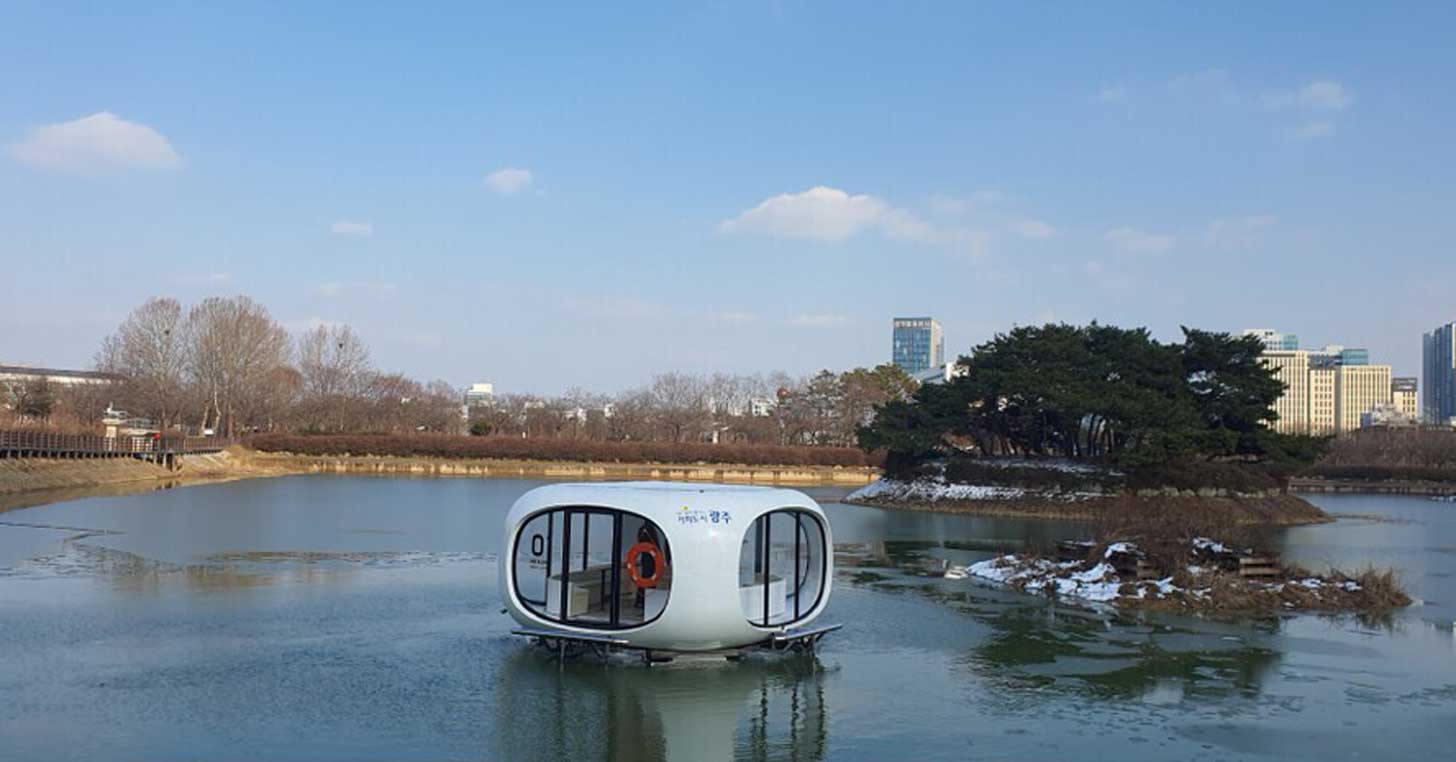
By day, the Healing Boat operates as a guided tour boat and gives visitors a 30-minute tour of local freshwater facilities, sharing information about water systems and tourism resources. At night, visitors can board the boat for food truck tours and water fireworks displays.
The idea is to turn these water purification systems into an enjoyable experience for members of the public, giving them a stake in the sustainability of their community.
By integrating 3D digital video content, guests can also explore underwater ecosystems and contribute to conservation and sustainability efforts, simply by boarding a boat.
“Because purification happens in a visible, citizen-facing way, it becomes easier for agencies to explain why environmental investment matters and what practical benefits it creates,” the statement from Ecopeace said.
“Instead of remaining an invisible back-end function, water quality management becomes something people can directly see, understand, and in some cases even participate in. This makes the Healing Boat especially relevant in places where water quality, public use, and city image work together.”
A TikTok video by Going Green Media about Ecopeace stated that the company works across South Korea and Southeast Asia, though the company suggests the Healing Boat could be utilized in any cities with large waterfront spaces.
And others seem to agree.
The Healing Boat received a 2025 CES Innovation Award in the Smart City category last year, gaining international acclaim for the design.
“Public freshwater management is no longer only about water quality. It increasingly sits at the intersection of citizen experience, urban identity, environmental policy, and spatial value,” Ecopeace’s statement concluded.
“That is why future waterfront management may require more than adding treatment equipment alone. In some places, it may become increasingly important to consider approaches that can both improve water quality and create visible public value.”
You may also like: Cities across Europe install 'moss banks' to reduce pollution from busy roadways
Header image courtesy of Ecopeace
BluAZ.com curates positive and solution-focused stories from trusted sources around the world.


 Why this story matters: We live in a time that often emphasizes our differences, but stories of community and collaboration remind us of ou...
 Why this story matters: This uplifting update reminds us that even in the face of significant obstacles, the human spirit remains resilient...
 Why this story matters: Not every step forward requires a loud announcement. This story highlights the kind of steady, under-the-radar prog...
 Why this story matters: Innovation isn't just about the latest gadget; it's about making life better for everyone. This story highl...
 Why this story matters: The intersection of technology and environmental stewardship is producing some of the most exciting news of our gen...
 Mexico Bans Captive Marine Mammals in Entertainment In a groundbreaking move, Mexico’s Congress unanimously approved a reform to the General...
 Why this story matters: Hope is not just a feeling; it is a strategy for moving forward. This article explores a real-world example of how ...


Please be good and do not spam. Thank you.