
Why this story matters: While challenges remain, stories like this demonstrate that constructive action can make a real difference.
Quick summary: This story highlights recent developments related to planet, showing how constructive action can lead to meaningful results.
Water shortages, rising temperatures, and droughts caused by climate change have an immense impact on agriculture — and today’s farmers are desperate to find solutions.
In the western United States, some are turning to dry-farming, a form of agriculture that doesn’t require irrigation.
Here’s how it works: Dry-farmed plants take moisture stored in the ground, rather than sprinkled from above.
Would you like to read more good news about Planet, Taste, Better, Farming, Approach, and Vegetables?
All farmers need is a wet, rainy season, followed by a dry growing season, as well as some methods like insulating a layer of mulch on top of soil to retain moisture, spacing plants more widely, and planting earlier in the season.
According to the Dry Farming Institute, “dry-farming is a low-input, place-based approach to producing crops within the constraints of your climate.” As the institute defines it, “a dry-farmed crop is irrigated once or not at all.”
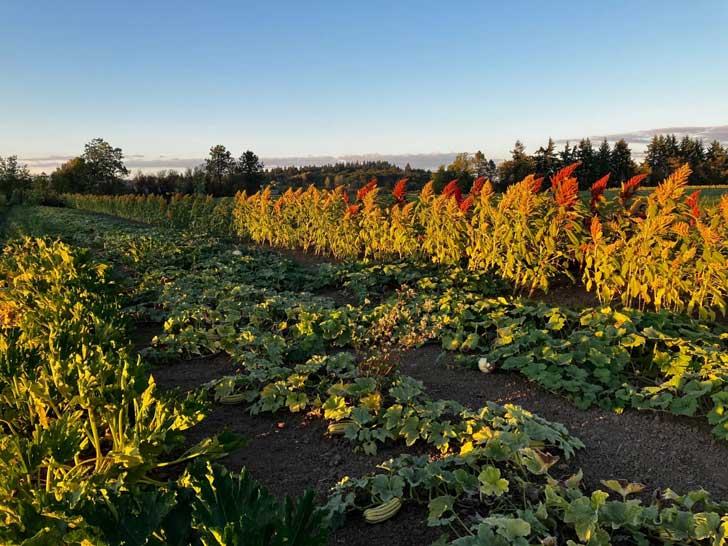
Dry-farming is not a one-size-fits-all solution, but it can save farmers thousands of liters in water every season — and help maintain a climate-resilient business.
And the best part? Dry-farmed produce notoriously tastes better than irrigated crops, and produce such as tomatoes, potatoes, squash, corn, watermelon, and even grapevines, are excellent candidates for dry-farming.
In fact, dry-farming is so game-changing for vineyards that some areas in Europe forbid irrigating wine grapes, in order to maintain their rich flavor.
It’s not a new concept.
Dry-farming is a long-held standard practice, from olive groves in the Mediterranean to melon fields in Botswana.
In the U.S., it dates back thousands of years among Indigenous peoples — proving once again that Indigenous knowledge is the key to protecting the planet.
“Dry farming is just farming — it’s our way of life,” Michael Kotutwa Johnson, an Indigenous resiliency specialist at the University of Arizona and member of the Hopi Tribe, told Science News.
“You get to really learn what the environment gives you, and you learn to reciprocate. It’s a beautiful thing, and it’s something that needs to be cherished.”
You may also like: This giant garden used to be a coal mine. Now, it feeds thousands every year
A version of this article was originally published in The 2024 Plants Edition of the Goodnewspaper.
Header image by Veronica White on Unsplash
GoodHeadlines.org curates positive and solution-focused stories from trusted sources around the world.


 The Nationwide Movement Turning Guns Into Garden Tools T he first time Mike Martin held an AK-47 was after the 2012 shooting at Sandy Hook E...
 Why this story matters: This uplifting update reminds us that even in the face of significant obstacles, the human spirit remains resilient...
 The Spark: How to Keep Your Community Cool During Heat Waves Welcome back to The Spark, our monthly newsletter that’s all about how people j...
 Mexico Bans Captive Marine Mammals in Entertainment In a groundbreaking move, Mexico’s Congress unanimously approved a reform to the General...
 Why this story matters: Innovation isn't just about the latest gadget; it's about making life better for everyone. This story highl...
 These Chefs Left Prestigious Culinary Jobs To Cook At Nursing Homes: 'We Want To Make This Industry Better' Facing burnout from his ...
 Why this story matters: While environmental news is frequently dire, there are pioneers quietly solving the most complex problems of our ti...


Please be good and do not spam. Thank you.