
Why this story matters: Stories like this remind us that improvement often comes through small, steady efforts.
Quick summary: This story highlights recent developments related to on this day, showing how constructive action can lead to meaningful results.
150 years ago today, the National League of Professional Baseball Clubs was formed. The older of the two leagues that make up Major League Baseball (MLB) in the US and Canada, it is the oldest professional team sports league still in existence in the world. The American League was founded 25 years later and after much consternation, they agreed to recognize each other as major leagues. They drafted rules and each established a team in New York City, and they decided to compete against each other (beginning in the Fall of 1903) in a championship tournament—the first “World Series”. READ the league charter clubs… (1876)
The National League of Professional Base Ball Clubs was established with eight charter members, as follows: the Chicago White Stockings, the Boston Red Stockings, the St. Louis Brown Stockings, the Philadelphia Athletics, the Hartford Dark Blues, the New York Mutuals, the Cincinnati Reds, and the Louisville Grays.
Would you like to read more good news about On This Day and This Day In History?
Confusing to the utmost with respect to the modern standings, the Chicago White Stockings would in fact not become the Chicago White Socks, but the Chicago Cubs. The Boston Red Stockings were not to become the Boston Red Sox, but rather the Boston Braves, which would become the Milwaukee Braves, which would become the Atlanta Braves. The Cincinnati Reds would also not become the modern day Cincinnati Reds.
All but Chicago and Boston would either be expelled, disbanded, or folded after one or a few seasons in the newly-formed league, and it wasn’t until a large player strike at the turn of the century in a competing organization that the Brooklyn Dodgers, Pittsburgh Pirates, and a new Cincinnati Reds joined the National League that the table began to resemble what Americans watch today.
MORE Good News on this Date:
-
New York City—first called New Amsterdam—became an officially incorporated city (1653)
- Robinson Crusoe was inspired by this day’s rescue of a shipwrecked man from a desert island (1709)
- Charles Brady King was born 146 years ago: an engineer and entrepreneur remembered as an artist, musician, poet, architect, mystic, inventor, and automotive pioneer who made the first car ever shown in Detroit (1868)
- The Knights of Columbus formed in New Haven, Connecticut (1882)
- A dog’s sled reached Nome, Alaska, with an urgently needed diphtheria serum, which later inspired the Iditarod race (1925)
55 years ago today, the Ramsar Convention on the Sustainable Use of Wetlands was signed in Ramsar, Iran. When stopping to think about it, it pre-dates many of the landmark international agreements of the original Environmentalism Movement by some margin, such as the Convention on Biodiversity (1994), the Convention on Migratory Species (1979), the Convention on International Trade in Endangered Species of Wild Fauna and Flora (1975), and the UN Convention on the Law of the Sea (1985).
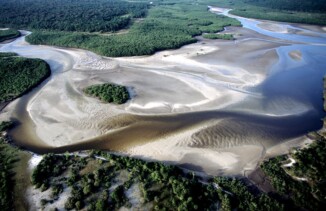
The list of wetlands of international importance included 2,331 Ramsar sites in May 2018 covering over 2.1 million square kilometers (810,000 sq. miles). The countries with the most sites are the United Kingdom with 175 and Mexico with 142. The country with the greatest area of listed wetlands is Bolivia, with around 148,000 square kilometers (57,000 sq. miles).
Many famous attractions, such as the Everglades in Florida, are listed as Ramsar sites. (1971)
113 years ago today, Grand Central Terminal in New York City was officially opened to the traveling public. The distinctive architecture and interior design consisting of legitimate works of fine art, Grand Central Terminal’s station house has earned it several landmark designations, including as a National Historic Landmark. Grand Central is one of the world’s ten most-visited tourist attractions, with 21.6 million visitors in 2018, excluding train and subway passengers.
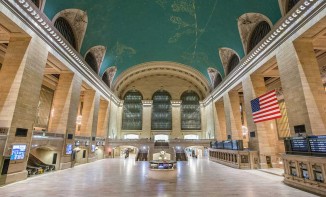
The Biltmore Room, Station Master’s Office, Waiting Area, Dining Concourse, and the Whispering Gallery are all places where the normal functions of a railway station were taken up by artists and architects for the purposes of beauty and grandeur.
There is a tennis club in the basement, as well as a squash court which held the Tournament of Champions. Before the COVID-19 pandemic, the Dining Concourse was operated by the co-founder of Restaurant Noma, the three-times voted best restaurant in the world.
There are 56 passenger tracks, and every train leaves one minute behind schedule to encourage those running along the tracks to make the train to slow down, as anyone looking to jump aboard safely at low speeds needs to match their running speed with the train’s.
On this day 144 years ago, the great lord of Irish literature, James Joyce, was born in Dublin; and on this day 102 years ago, Joyce published one the greatest works of literature: Ulysses. In it, the modernist writer chronicles the normal appointments and dealings of one man, Leopold Bloom, as he goes about his day in Dublin city. Named after the Latin word for Odysseus, Bloom’s appointments roughly parallel the famous Greek’s adventure. The novel’s stream-of-consciousness technique, careful structuring, and experimental prose—replete with puns, parodies, and allusions—as well as its rich characterization and broad humor, have led it to be considered a masterpiece.
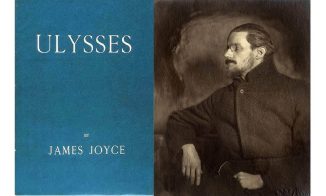
Literary critic and celebrated poet T. S. Eliot wrote of Ulysses that “I hold this book to be the most important expression which the present age has found; it is a book to which we are all indebted, and from which none of us can escape.” Another critic, Edmund Wilson noted that Ulysses attempts to render “as precisely and as directly as it is possible in words to do, what our participation in life is like—or rather, what it seems to us like as from moment to moment we live.”
Joyce would publish four major works, including Portrait of the Artist as a Young Man, The Dubliners, Finnegan’s Wake, and Ulysses. As Irwin Schiff once said “any book worth censoring is a book worth reading,” and indeed as the first few chapters of Joyce’s Ulysses were published in a magazine and made their way to the United States, the New York Society for the Suppression of Vice, filed a complaint which led to the book’s censoring in 1921. It was also blacklisted for obscenity in the UK around the same time until 1936.
Joyce’s legacy is uniquely strong. The open-ended form of Joyce’s novels keeps them open to constant reinterpretation. They inspire an increasingly global community of literary critics. Joyce studies—based on a relatively small canon of three novels, a small short story collection, one play, and two small books of poems—have generated over 15,000 articles, monographs, theses, translations, and editions, and he even has his own holiday of June 16th or “Bloomsday” after the protagonist in Ulysses. (1882, 1922)
And, 83 years ago today, Nazi forces were finally defeated at the Battle of Stalingrad— the turning point of World War II and the largest and bloodiest battle in all of world history.
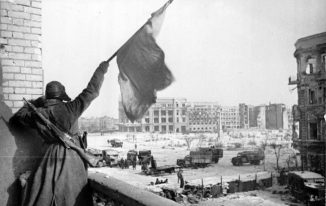
2.2 million soldiers were involved, with up to 2 million killed, wounded or captured. After five months of combat in the frigid Soviet winter, the remaining Germans were not only starving and frostbitten, but running out of ammunition, yet Hitler forbade them to surrender. A handful of bitter senior officers were taken to Moscow and joined the National Committee for a Free Germany, signing anti-Hitler statements that were broadcast to German troops. (1943)
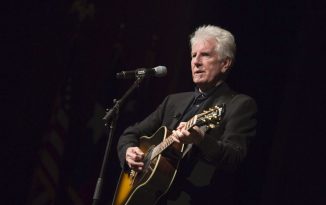
Happy Birthday to singer/songwriter Graham Nash, who turns 84 today. The English performer formerly of The Hollies is best known for his contributions to the folk-rock supergroup Crosby, Stills Nash & Young. A citizen of both the UK and United States, and author of ‘Wild Tales: A Rock & Roll Life’, he still records and performs. For instance, Nash released a new album in 2016 called, This Path Tonight. (1942)
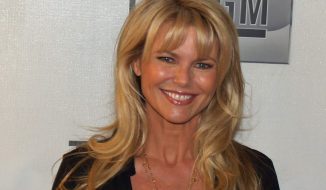
Happy Birthday to Christie Brinkley who turns 72 today. She gained worldwide fame as a Sports Illustrated Swimsuit model in the late 1970s—appearing on an unprecedented three consecutive covers. She spent 25 years as the face of CoverGirl and appeared on over 500 magazine covers and is a lifelong vegetarian. (1954)
And, 35 years ago today, the president of South Africa delivered the speech that marked the beginning of his dismantling of apartheid.
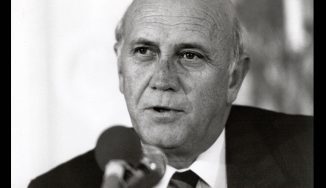
In a televised speech at the opening of Parliament, F.W. de Klerk lifted a 30-year political ban against the African National Congress and other groups, freeing them to resume their political activities against white minority rule. And he also vowed to free ANC leader Nelson Mandela from prison. He announced a moratorium on the death penalty, a restoration of some press freedoms, and eased up on a decade-old national state of emergency.
Nine days later Nelson Mandela walked out of prison after 27 years and resumed the leadership of the ANC, which attended bilateral talks with the De Klerk government just three months later. Nobel Prize winner Archbishop Desmond Tutu said of the moment, “He has taken my breath away.” (1990)
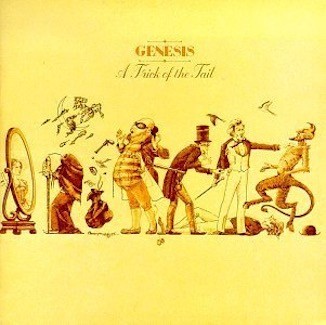 And, 50 years ago today, Genesis released A Trick Of The Tail, their seventh studio album, but the first one to feature drummer Phil Collins as full-time lead vocalist two years after the sudden departure of their theatrical singer Peter Gabriel.
After listening to over 400 audition tapes from vocalists, the band entered the studio without a clear idea of who would be their next frontman. And, a sort of miracle happened. Although Collins taught the leading candidates some of the songs, no one proved to be a stand-out, so the band let him have a go at singing Squonk. The performance was so strong that he took over as lead on the rest of album, and having been trained as a child actor, proved to be a wonderful replacement at center stage. Genesis was inducted into the Rock and Roll Hall of Fame in 2010 which included Tony Banks, Mike Rutherford, Phil Collins, and Steve Hackett, along with Peter Gabriel. (1976)
WATCH a clip of interviews with the band about the making of A Trick Of The Tail.
[embedded content]GoodHeadlines.org curates positive and solution-focused stories from trusted sources around the world.


 The Nationwide Movement Turning Guns Into Garden Tools T he first time Mike Martin held an AK-47 was after the 2012 shooting at Sandy Hook E...
 Why this story matters: This uplifting update reminds us that even in the face of significant obstacles, the human spirit remains resilient...
 The Spark: How to Keep Your Community Cool During Heat Waves Welcome back to The Spark, our monthly newsletter that’s all about how people j...
 Mexico Bans Captive Marine Mammals in Entertainment In a groundbreaking move, Mexico’s Congress unanimously approved a reform to the General...
 Why this story matters: Innovation isn't just about the latest gadget; it's about making life better for everyone. This story highl...
 Why this story matters: This story offers a refreshing and deeply necessary look at how practical problem-solving and human ingenuity can i...
 These Chefs Left Prestigious Culinary Jobs To Cook At Nursing Homes: 'We Want To Make This Industry Better' Facing burnout from his ...


Please be good and do not spam. Thank you.