
Why this story matters: In this feature, we move past the sensationalism to look at a genuine success story—one that emphasizes collaboration over conflict and results over rhetoric.
Quick summary: This story highlights recent developments related to evolution, showing how constructive action can lead to meaningful results.
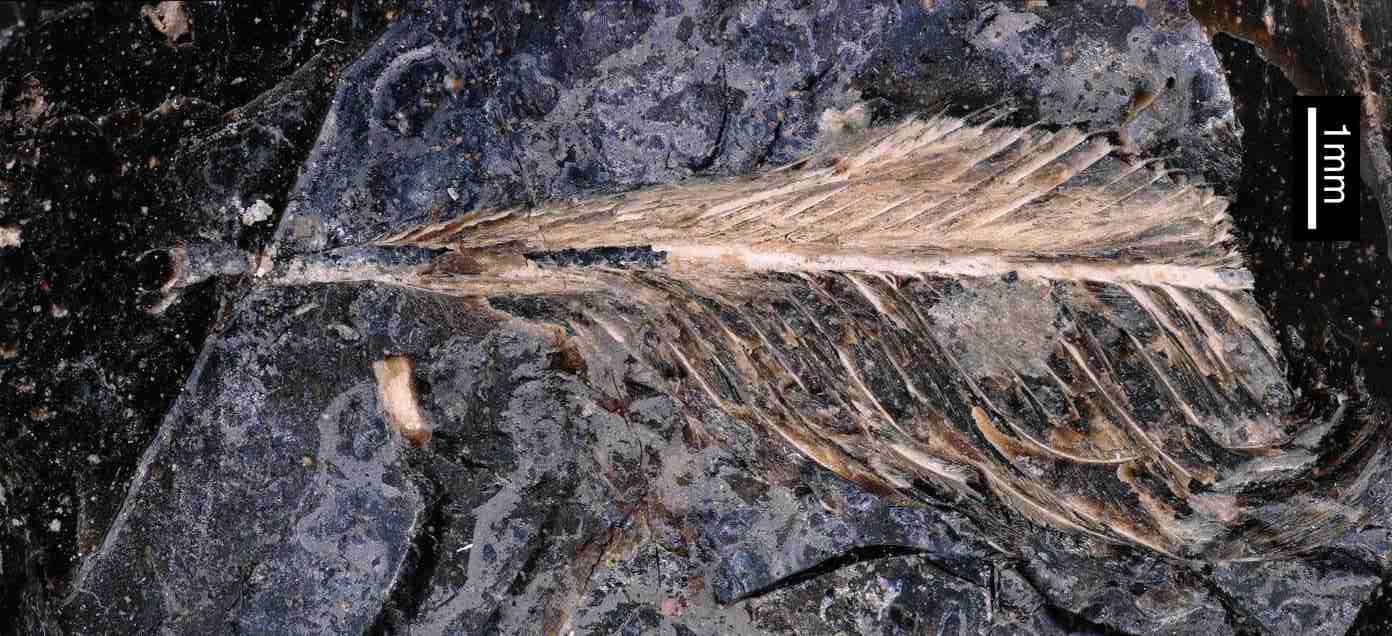
A feather preserved inside dinosaur dung could help explain why birds survived the mass extinction that wiped out most life on Earth.
Specifically, it could explain whether it prepared a certain lineage of birds to weather the unnatural winter that followed in the wake of the asteroid impact.
Scientists at the Field Museum of Chicago say a dinosaur ate a bird around 66 million years ago, and that its dung preserved the best example of a feather ever found from the dinosaur age.
By studying the feather, American researchers have found clues that help explain why birds are the only group of dinosaurs that survived the mass extinction on Earth 66 million years ago.
“It’s such a beautiful, well-preserved feather, from such an unexpected source, and it’s exciting that it could help us answer this huge question in paleontology,” the study’s lead author Professor Jingmai O’Connor said.
Professor O’Connor has spent years studying fossilized birds to try to find out why only one group of birds called Neornithes survived. It’s a puzzle worth solving, as every living bird today is one of their descendants.
The fossil was discovered in 2016, by study co-author David DeMar, Jr., while conducting fieldwork in Montana.
“I was crawling up a rocky outcrop collecting fish fossils when I came across a dark, reddish-brown nodule about half the size of a golf ball,” he remembers. “I picked it up and scanned its surface through my hand lens, and that’s when I couldn’t believe what I was seeing, a tiny fossil feather.”
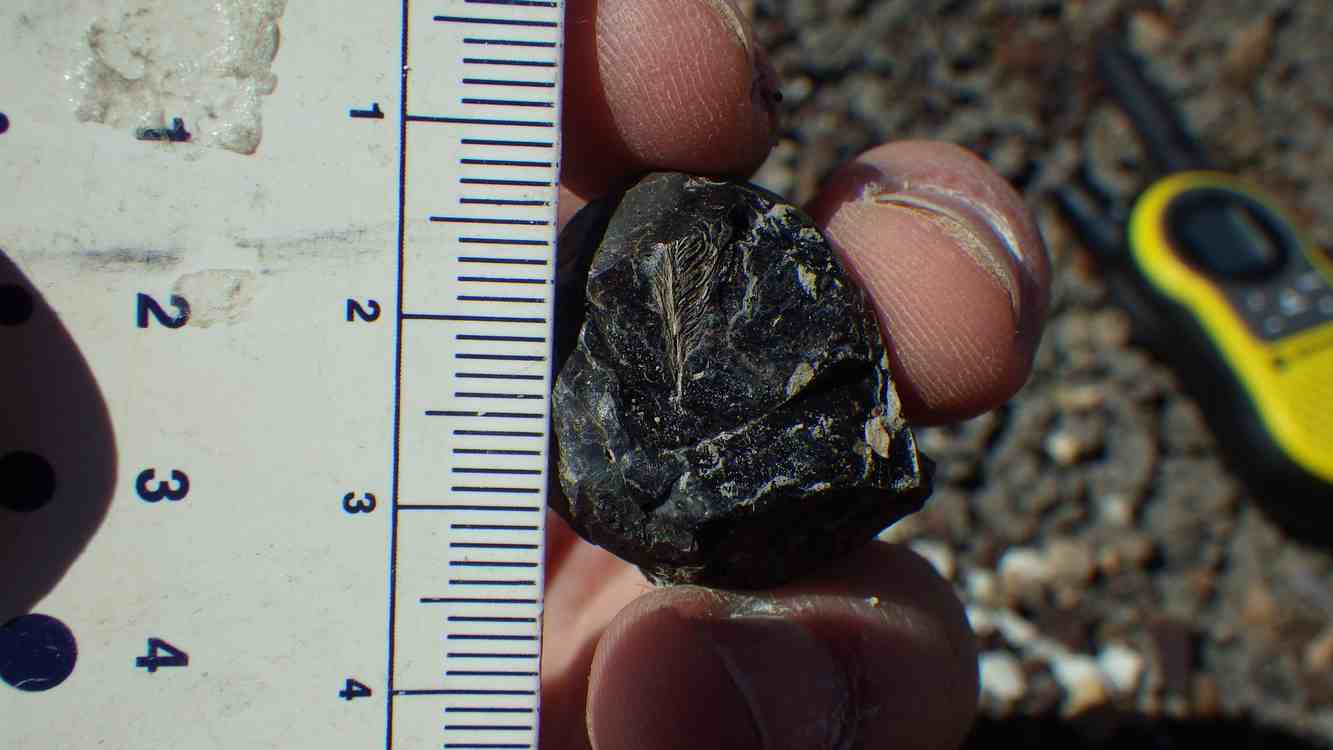
Scientists examined the specimen’s mineral composition and took CT scans of it. Not only did it contain multiple feathers, but also tiny fish scales from a gar, and leg bones from a bird called a hesperonithiform.
“Hesperornithiforms were aquatic birds, ecologically similar to loons,” said O’Connor. “Most couldn’t fly, and instead, they used their specialized feet to dive down into the water to hunt for things like fish.”
They are the earliest known avian lineage to lose flight in favor of a specialized foot-propelled diving lifestyle, but unlike the Neornithes, Hesperornithiforms did not survive beyond the Cretaceous era.
The feathers found in the droppings are the first hesperornithiform feathers ever found, and their features seem to represent a middle ground between feathers that existed then and those of our present time. O’Connor believes one of the main reasons Neornithes survived is down to differences in their feathers compared to other birds.
SEE ALSO: Single Fossil Shows a Pterosaur Eaten by an Ichthyosaur Eaten by a Pliosaur: ‘A 3-Way Chompfest’
“Some of these diving birds’ feathers seem to have been modern-looking and water-proof, but they also had some smaller, fuzzy, primitive body feathers that we associate with dinosaurs…” she said.
If the hesperornithiforms’ feathers weren’t as good at keeping their bodies warm as Neornithes’ feathers, O’Connor believes that could have been a major factor in their abilities to survive the impact winter following the asteroid strike.
“The hesperornithiforms retain primitive feather types that may not have been as efficient for insulation as modern plumaceous feathers, and that could explain why they went extinct along with the enantiornithines [another group of birds].”
DINOS OF A FEATHER: Antarctica Yields Intact Skull — An Ancestor of Today’s Waterfowl That Survived Dinosaur Extinction
“We rarely find fossils of birds and even more rarely their feathers, giving us such important insight into the evolution of this key aspect of their biology,” said study co-author Professor Greg Wilson Mantilla, from the University of Washington.
The study was published in the journal Current Biology, and advocates for more CT scanning of existing fossilized dung samples held in collections on the off chance that more feathers could be contained therein.
BluAZ.com curates positive and solution-focused stories from trusted sources around the world.


 Jane Goodall's Most Iconic Quotes On Hope & Making A Difference Dr. Jane Goodall passed away at the age of 91. "Dr. Goodall...
 Why this story matters: It is often said that bad news travels fast, but good news has a deeper impact. This story explores a quiet victory...
 Solitary Rescuer Leads 165 Children to Safety During Recent Texas Flooding–Hailed as a Hero (left) an undated photo of Scott Ruskan (right)...
 Why this story matters: Behind the high-level statistics and political debates, there are real people making a real difference. This articl...
 Why this story matters: Beyond the surface-level noise of daily events, there are deep, systemic improvements taking place in our society. ...
 Why this story matters: While it may not dominate the 24-hour news cycle, the development highlighted in this article represents a signific...
 Why this story matters: Positive change rarely happens with the strike of a clock; it is usually the result of tireless dedication. This st...


Please be good and do not spam. Thank you.