
Why this story matters: Real growth doesn't always come with a grand announcement; sometimes it’s the result of years of quiet, steady persistence. This piece honors that journey by highlighting a success story that was a long time in the making.
Quick summary: This story highlights recent developments related to wildlife, showing how constructive action can lead to meaningful results.
BY THE OPTIMIST DAILY EDITORIAL TEAM
There’s something almost absurd about how we’ve always measured wildlife. Two trained ecologists visit the same river, spend days cataloguing what they can see, and come back with completely different species lists. Neither is wrong. The data just can’t be compared, which means it can’t really be used.
“If you and I went to the same river, we would not produce the same species list,” says Dimple Patel, CEO of NatureMetrics. “This makes it very difficult to bring together data sets that people are actually able to reconcile as well as standardise on a global basis.”
Instead, her company began building with just a simple bottle of water.
Every living thing leaves a genetic trace
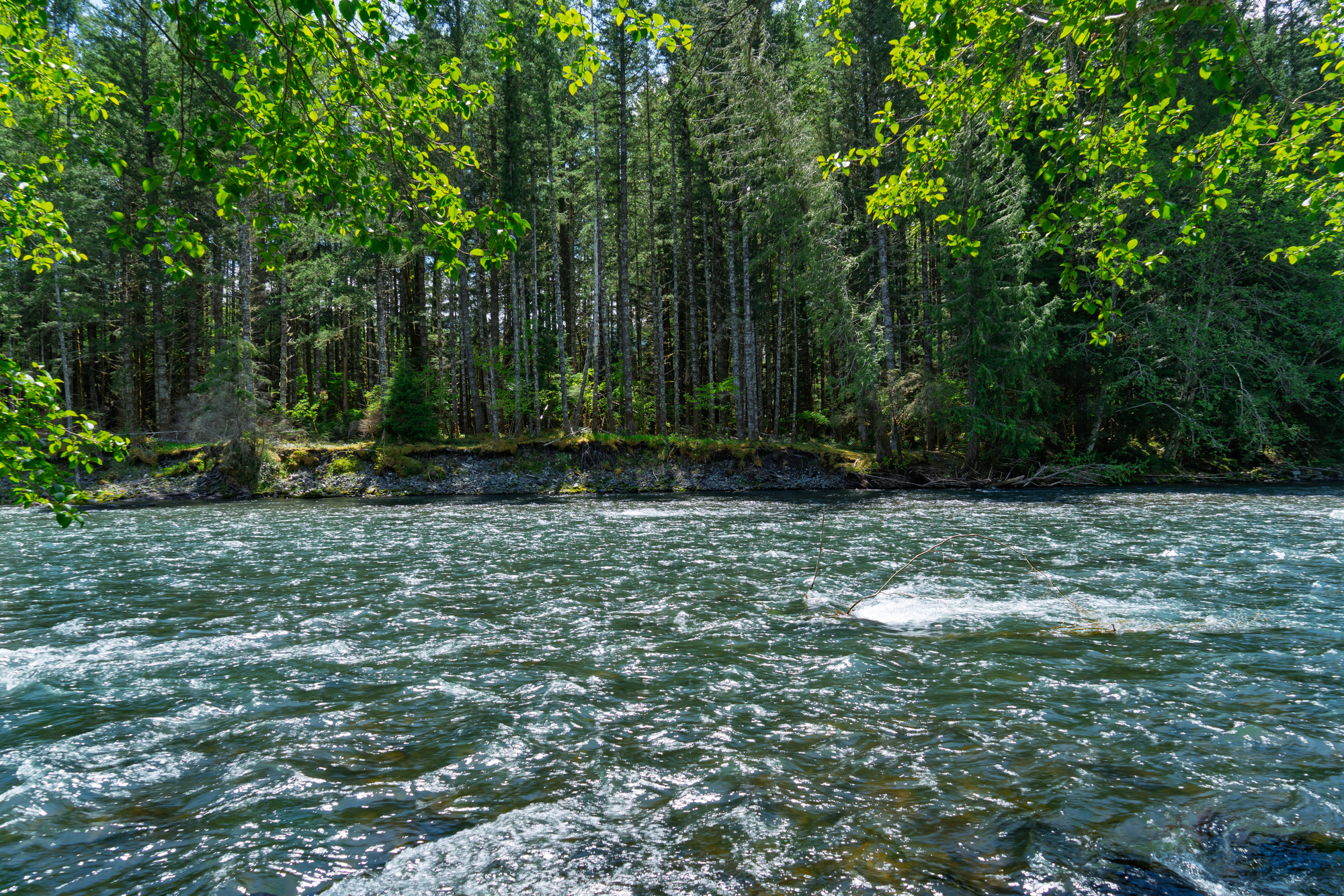
Everything that lives near water sheds DNA into it: skin cells, saliva, traces that linger for days to weeks. That’s environmental DNA, or eDNA. One liter of river water contains enough to identify every species that passed through recently.
“Every living organism will shed DNA into its environment,” Patel says. “From that litre of river water, we will then be able to map back each of those traces of DNA back to the fish, the amphibians, the mammals, the insects that they started from.”
NatureMetrics ships sampling kits anywhere in the world. No specialist training. Patel’s team wanted to test just how simple the process could be, so they handed a kit to a five-year-old. “She got excellent results.”
The filter goes back to a lab, where DNA sequencing technology, the same used in forensic science, identifies every species in the sample. No trapping, no netting. The ecosystem isn’t touched. “It takes a fraction of the time, a fraction of the cost, but gives you an incredibly accurate and rich data set,” Patel says.
The significance of this moment
Freshwater species populations have fallen 84 percent since 1970. More than half of global GDP depends on nature in some form. Degraded soil threatens food supply chains, and losing natural flood barriers puts communities at real risk. Measuring all of that, at scale, in a way that holds up across sites and researchers, wasn’t really possible before now.
NatureMetrics has processed samples in 116 countries, working with more than 600 organizations. This year it hit a milestone: 10 percent of Earth’s surface surveyed using eDNA. The platform maps species detections, tracks change over time, and can show whether restoration work in a degraded area is doing anything.
The clients include WWF and conservation groups, but also mining companies, energy producers, and agricultural supply chains. Consumer goods companies have been using the data to understand the bacteria and fungi that make food production possible at all.
“How can we on a biological level help nurture the soil that is going to continue to give us food for the next 50 years?” Patel asks.
Nature on the balance sheet
NatureMetrics was recognized as an Earthshot Prize finalist a couple of years ago. The prize, founded by the Prince of Wales, has given Patel something useful when talking to industries that are slow to change: proof that the science has been reviewed by someone other than the company selling it.
“Having someone like the Earthshot Prize, where you know they have done due diligence — being able to say we’re supported by them, they trust our technology — it really opens a lot of doors,” she says.
The doors she wants open are in corporate boardrooms. Patel wants biodiversity to move out of field science and into finance, to show up on the same documents where companies account for what they own and what they owe.
“We want nature to be on balance sheets,” she says. “We want organisations and companies to be actually valuing the impact they’re having on nature and accounting for that in the way that they operate their businesses and make their decisions.”
The data to make that possible already exists. The harder part is getting the people who run large companies to treat it as something worth looking at. “We’re looking to give nature a spot in the boardroom,” Patel says.
Did this solution stand out? Share it with a friend or support our mission by becoming an Emissary.
BluAZ.com curates positive and solution-focused stories from trusted sources around the world.


 Why this story matters: This is a story about the power of a single idea and the community that rallied behind it. It serves as a powerful ...
 Mexico Bans Captive Marine Mammals in Entertainment In a groundbreaking move, Mexico’s Congress unanimously approved a reform to the General...
 Why this story matters: Data-driven progress often moves at a pace that is too slow for breaking news, but its impact is far more permanent...
 Why this story matters: This story offers a refreshing and deeply necessary look at how practical problem-solving and human ingenuity can i...
 Why this story matters: This piece serves as a constructive counterpoint to the prevailing sense of pessimism, offering readers a well-reas...
 Why this story matters: While we must remain clear-eyed about the challenges that remain, it is equally important to acknowledge the victor...
 Why this story matters: We live in a time that often emphasizes our differences, but stories of community and collaboration remind us of ou...


Please be good and do not spam. Thank you.