
Why this story matters: While it may not dominate headlines, this story reflects meaningful change in action.
Quick summary: This story highlights recent developments related to apps, showing how constructive action can lead to meaningful results.
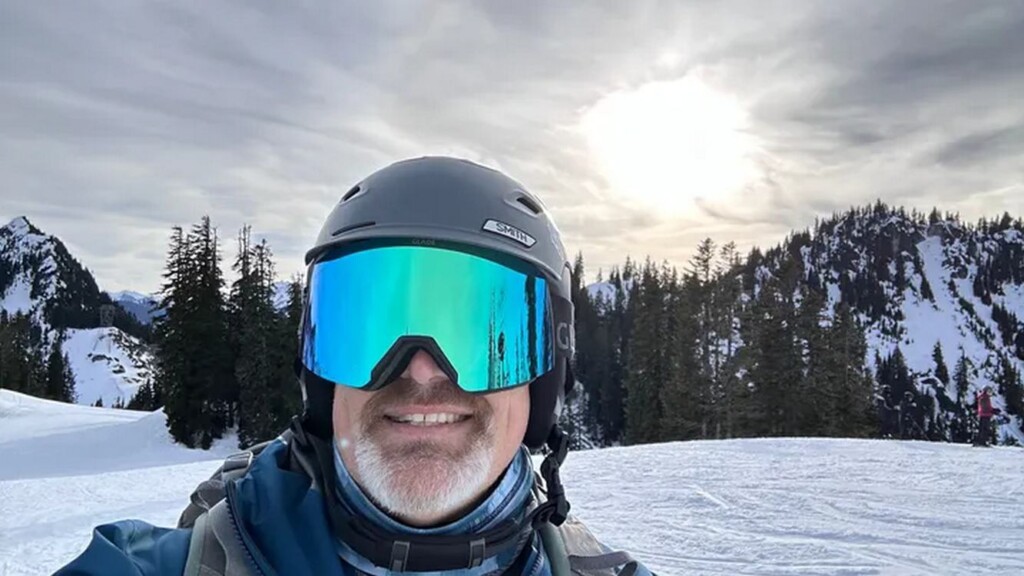
A wife used her “Find My iPhone” feature to guide search and rescue to the location of her husband who had been buried in an avalanche.
Michael Harris was skiing the Big Chief Bowl at Stevens Pass Ski Resort in late February when the snowpack suddenly gave way beneath him.
He was caught in an avalanche and was reduced to try and use a swimming motion to guide himself narrowly around a boulder before he was buried, a sensation he described as being like “encased in cement.”
Would you like to read more good news about Apps, Disasters, Skiing, Heroes, Family, and Survival?
His life was immediately saved by the fact that he remained upright. Unable to move, he couldn’t reach his Apple Watch, nor his iPhone, even as he heard it ringing in his front pocket.
“So, my wife was calling me, and when I was buried, I heard something. I felt someone calling me, because I felt it vibrate, I could hear it ring, yet my hand couldn’t get to it,” Harris told Fox 13.
Meanwhile, Harris’ wife Penny was unwilling to drop her feeling of intuition that something was wrong, even though it’s perfectly normal to not answer a phone call while skiing. Activating her “Find My iPhone” app with Harris’ data rather than hers, she noticed it wasn’t moving, and that’s when she took action.
She got in contact the resort and showed staff the position of Harris’ phone, which was able to guide rescue teams at the who knew there’d been an avalanche right to the buried husband and father.
“I was inches away from the thing that could save my life, but I just couldn’t get there. And yet because she knew how to use ‘Find My iPhone,’ I’m here today,” he told Fox.
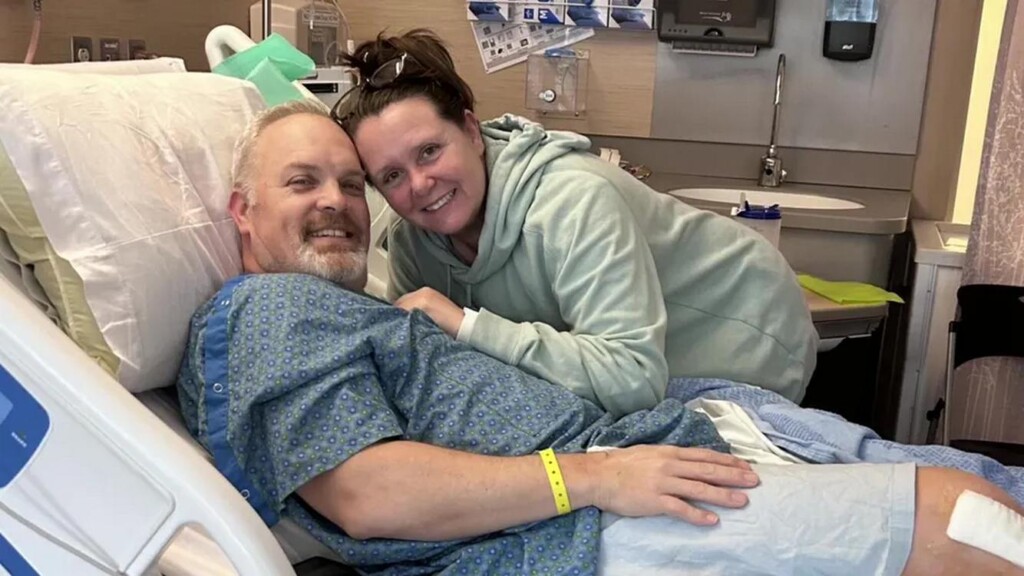
His daughter Lauren wrote about his condition when arriving at the hospital on a GoFundMe page, which has raised $35,000 of the $40,000 needed to cover medical bills and the family’s bills, as Harris was the sole earner in the household.
“He was hypothermic with a temp. in the high 70s/ very low 80s. After various labs and imaging, my dad sustained a contusion of his lung, pneumonia, injuries to his kidneys and a right tibial plateau fracture.”
Recovery was deigned to be 14-16 weeks if all goes well.
“It is a true miracle that he survived and didn’t sustain life altering or life threatening injuries,” Lauren said. “I have been thanking God since the incident that he is still here with us.”
Surviving an avalanche often depends on luck and preparation: is there someone who knows where you are (like Penny) who will become concerned if they don’t hear back from you, or if they hear on the news there’s been an avalanche?
Regarding luck, the position in which one is buried, and whether or not they’ve sustained injuries make an enormous difference. Experts recommend curling up in a ball from the moment the avalanche takes you. This not only helps shield your vital areas from impacts with debris, but can sometimes leave you buried with pockets of air between your limbs that can extend your oxygen supply under the snow significantly.
MORE SURVIVAL STORIES: Backpacker Found Alive in Australian Bush After 12 Days of Surviving Her Major Mistake
Another recommendation is take as big a breath as you can, close your mouth to stop snow filling up your throat, and put your head between your arms to create an air pocket.
If you’ve been buried completely, it can be hard after the force of the impact to even be sure whether you’re facing down or up. A trick to figure out which way you’re facing is to let spit roll off your lips. Up will be the direction opposite of whichever part of your face it dribbles down. It’s not very dignified, but if you’re able to move even at all, it could save your life.
AVALANCHE ESCAPES: Two Snowboarders Save the Lives of Skiers After Nearly Losing Their Own in Palisades Avalanche
Regarding movement, if it’s clear you can’t move whatsoever, and if there’s even a small chance someone will come looking for you, the better course of action is not to move, as there is limited oxygen under the snow, and frantic, panicked movement could cause you to asphyxiate as the carbon dioxide we exhale accumulates right in front of your mouth.
Some safety equipment, like the Avalung device, will actually extend oxygen supply if used correctly, although some doubt that anyone would have the wherewithal to all out the plastic tube and put it in their mouth while caught in an avalanche.
But the best way to survive an avalanche is, of course, to know when the snowpack is at risk of sliding, and to stay away from avalanche zones.
GoodHeadlines.org curates positive and solution-focused stories from trusted sources around the world.


 Why this story matters: This uplifting update reminds us that even in the face of significant obstacles, the human spirit remains resilient...
 Why this story matters: Innovation isn't just about the latest gadget; it's about making life better for everyone. This story highl...
 Why this story matters: We live in a time that often emphasizes our differences, but stories of community and collaboration remind us of ou...
 Why this story matters: While it may not dominate the 24-hour news cycle, the development highlighted in this article represents a signific...
 Why this story matters: This uplifting update reminds us that even in the face of significant obstacles, the human spirit remains resilient...
 Why this story matters: While it is easy to become cynical in an age of instant, often negative information, stories like this prove that t...
 Why this story matters: In this feature, we move past the sensationalism to look at a genuine success story—one that emphasizes collaborati...


Please be good and do not spam. Thank you.