
Why this story matters: This uplifting update reminds us that even in the face of significant obstacles, the human spirit remains resilient, finding ways to adapt, improve, and thrive in spite of the odds.
Quick summary: This story highlights recent developments related to artificial intelligence, showing how constructive action can lead to meaningful results.
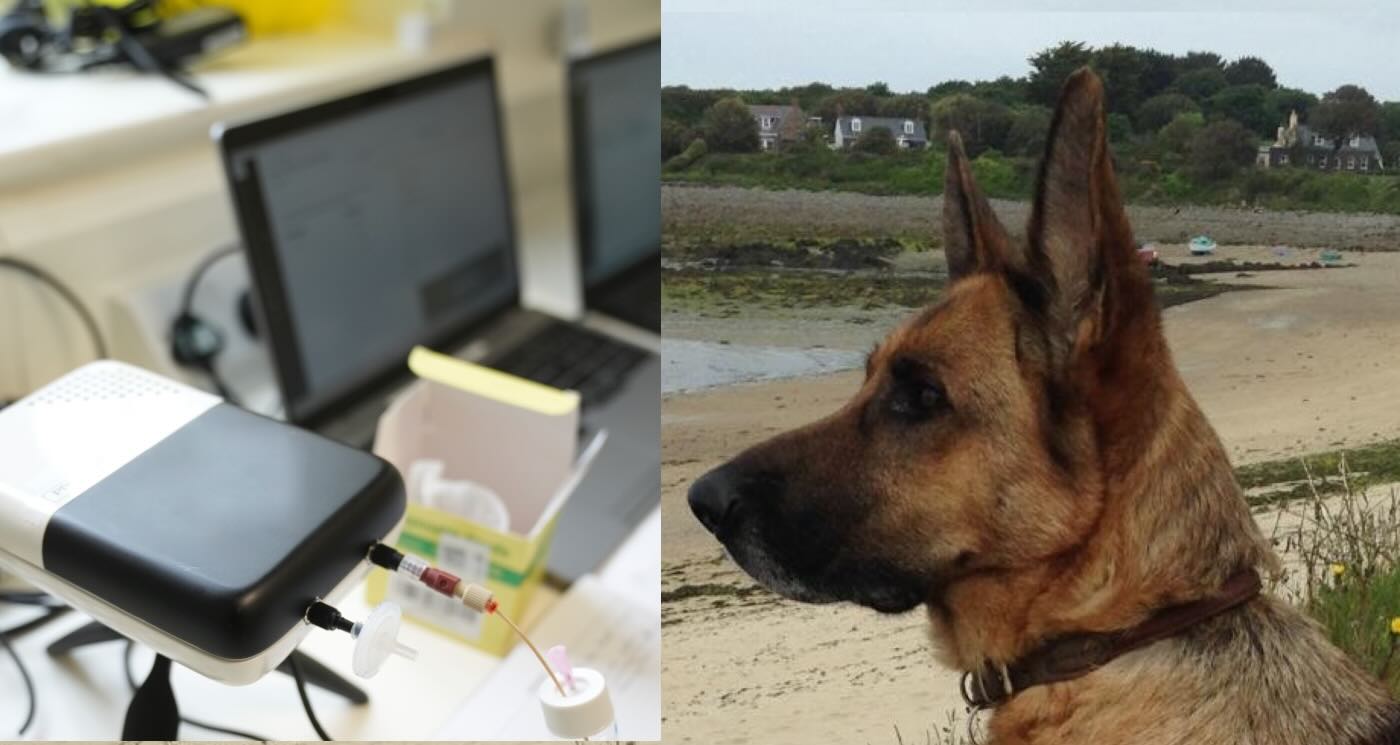
Colleen Ferguson says her German shepherd saved her life by detecting cancer in its earliest stages—and causing her to suspect something might be wrong when the dog kept obsessively smelling her breath.
For weeks, two-year-old Inca would sniff at her mouth and frown. The 60-year-old got her teeth checked, and doctors did tests related to her gluten intolerance, but they all came back negative.
Inca would not quit the habit, so the woman from Kent, England, decided to schedule a full body scan, which revealed a “golf ball sized tumor” in her left lung–it was stage one cancer.
Would you like to read more good news about Artificial Intelligence, Dogs, Animals, Prevention, Technology, and Luck?
“She just had this focused intent on my mouth,” the former science teacher said. “She would give me such a look and walk away.”
“In no way did I expect lung cancer. It was such a shock because I am a non-smoker, and I had absolutely no symptoms at all, apart from being tired.”
After a surgery to remove the tumor Colleen didn’t need any further treatment or radiation, and she’s now making the most of her retirement years as a creative writer and published author.
“The surgeon told me, ‘we never catch it at stage 1, your dog has saved your life.
“I was just so lucky. To catch it that early was just remarkable. People need to listen to their dogs.”
Researchers in the UK have evidence that is proving that dogs can, indeed, detect cancer with their superior sense of smell.
The nonprofit Medical Detection Dogs began a groundbreaking study in 2024 to teach seven pooches—Labradors, cocker spaniels, and a retriever—how to detect tumors simply by smelling urine in pots.
“Dogs have shown us time and time again that diseases have an odor,” Claire Guest, the CEO and Chief Scientific Officer at Medical Detection Dogs, told The Times. “We are not sure whether that is the odor of the tumor itself, or the body’s response to the tumor.”
Clinical trials have proven that dogs can reliably detect diseases including prostate cancer, bladder cancer, Covid-19, and even Parkinson’s—and dogs can be trained to do so.
Now a machine nose is being developed at MIT
Scientists are now developing an ‘e-nose’ trained by artificial intelligence to replicate the dogs’ responses to cancer samples.
MORE FASCINATING NOSES:
• Researchers’ AI Device Can Sniff Out Cancer in Blood Samples With 95% Accuracy For Hard to Detect Types
• Dog Saves Its Owner’s Life When It Sniffs Out Cancer, Not Once, But 3 Times
In collaboration with Medical Detection Dogs, a quantum physicist at the Massachusetts Institute of Technology, Dr. Andreas Mershin, has created the machine e-nose that uses chemical sensors to make it capable of “smelling” urine samples—and detecting the volatile organic compounds, which are tiny odor molecules in the air.
The e-nose is now being tested on 500 urine samples from patients at the Milton Keynes University Hospital near London, including some with prostate cancer and healthy controls, to see if it can accurately detect cancer.
Working with a chemistry team at the University of Texas at El Paso, Dr. Mershin hopes it will be approved as a clinical tool in hospitals within two years.
“This is a major milestone,” said Mershin. “We’ve worked to emulate the dogs’ abilities and train machines in a similar way—rewarding them for correct identifications.”
And such e-nose capabilities could ultimately be implemented into our smartphones. Our devices already have eyes and ears, and now technology with olfactory intelligence is the next frontier—informing a generation of non-invasive diagnostic tools for better health.
“It’s like giving our devices a new sense: a nose.”
RODENTS CAN DO IT, TOO: Rats Trained to Sniff Out Tuberculosis are More Sensitive Than Microscope Testing
“When I trained our first cancer detection dog over 15 years ago, the goal was always to inform scalable technology—not to have a dog in every hospital,” said Ms. Guest. “Seeing that vision start to come to life with this E-nose is an incredibly proud moment.”
GoodHeadlines.org curates positive and solution-focused stories from trusted sources around the world.


 Why this story matters: This uplifting update reminds us that even in the face of significant obstacles, the human spirit remains resilient...
 Why this story matters: Innovation isn't just about the latest gadget; it's about making life better for everyone. This story highl...
 Why this story matters: While it is easy to become cynical in an age of instant, often negative information, stories like this prove that t...
 Mexico Bans Captive Marine Mammals in Entertainment In a groundbreaking move, Mexico’s Congress unanimously approved a reform to the General...
 Why this story matters: While environmental news is frequently dire, there are pioneers quietly solving the most complex problems of our ti...
 Why this story matters: In the face of daunting global challenges, it is the smaller, localized victories that often provide the most signi...
 Why this story matters: While it may not dominate the 24-hour news cycle, the development highlighted in this article represents a signific...


Please be good and do not spam. Thank you.