
Why this story matters: This uplifting update focuses on solutions rather than problems — and that’s worth paying attention to.
Quick summary: This story highlights recent developments related to painting, showing how constructive action can lead to meaningful results.
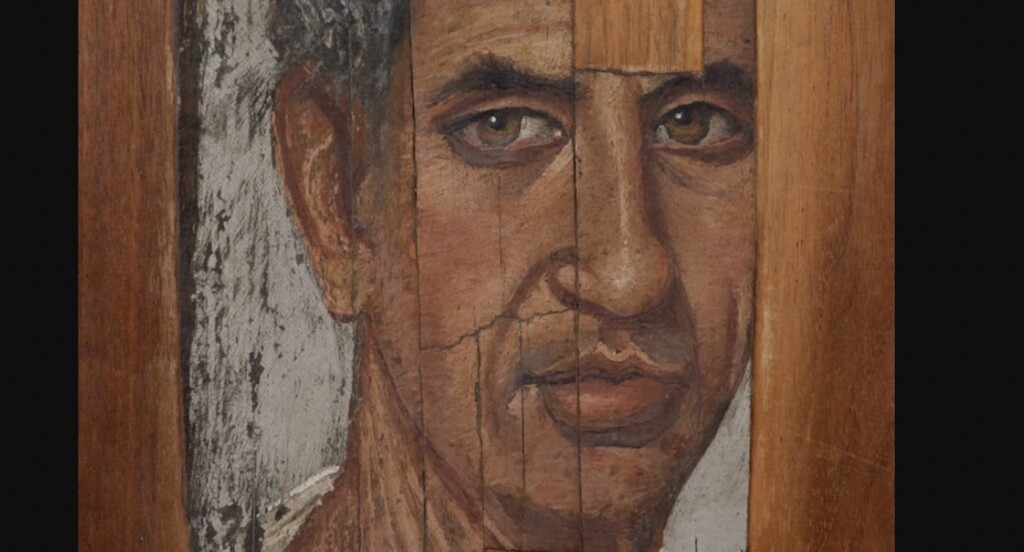
Sotheby’s recently sold a painting of a man from Roman-controlled Egypt in the first century CE that experts suggest represents the dawn of realistic portraiture 1,200 years before it appeared in Italy.
The image is part of a family of works known collectively as the Fayum Mummy Portraits, all of which were found during 19th century excavations at a site called Hawara in Egypt’s Fayum region.
The portraits were placed atop mummified remains like masks, and were painted with pigment mixed with melted beeswax on wooden panels. Over 900 have been found, and some have been auctioned.
Would you like to read more good news about Painting, Egypt, Antique, Arts Leisure, Arts, and Rome?
This portrait of a dark-skinned senior with graying hair, piercing hazel eyes, and a large lower lip recently brought in $889,000 with fees. Though they were painted and entombed in Egypt, the subjects could be Romans, whose nobility could afford both mummification and portrait commissions.
The nose might give the man up as a Roman; the substantial bridge being a feature of the Italian race still today. Others are perhaps less obvious.
What unquestionably stands out is the true air of realism in the work—one gets the feeling all at once that the man truly appeared as he is portrayed.
MORE INSIGHTS INTO ANCIENT LIFE: 2,000 Year-old Razor That Shaved Ancient Romans Is Unearthed and Up for Auction
“It invites you to want to know more about him and to feel his presence,” said Alexandra Olsman, a Sotheby’s specialist in ancient sculpture and works of art.
Roman domination of Egypt came only after Macedonian domination of Egypt under the Ptolemaic dynasty. Whatever skin/eye color and features the ancient Egyptian race had, the population in the major cities would have long been altered by intermarrying with northern Mediterraneans.
It’s not known whether the sitters were painted in death or life, or some state in between of infirmity. Olsman told CNN that with the sincere connection through the eyes, it would seem unlikely to be the artist’s interpretation of a dead man.
Sotheby’s has sold over a dozen Fayum mummy paintings over the years, and this one along with another featuring a curly-headed, younger man, commanded the highest bids.
GoodHeadlines.org curates positive and solution-focused stories from trusted sources around the world.


 The Nationwide Movement Turning Guns Into Garden Tools T he first time Mike Martin held an AK-47 was after the 2012 shooting at Sandy Hook E...
 Why this story matters: This uplifting update reminds us that even in the face of significant obstacles, the human spirit remains resilient...
 Mexico Bans Captive Marine Mammals in Entertainment In a groundbreaking move, Mexico’s Congress unanimously approved a reform to the General...
 Why this story matters: Innovation isn't just about the latest gadget; it's about making life better for everyone. This story highl...
 These Chefs Left Prestigious Culinary Jobs To Cook At Nursing Homes: 'We Want To Make This Industry Better' Facing burnout from his ...
 Why this story matters: While environmental news is frequently dire, there are pioneers quietly solving the most complex problems of our ti...
 The Spark: How to Keep Your Community Cool During Heat Waves Welcome back to The Spark, our monthly newsletter that’s all about how people j...


Please be good and do not spam. Thank you.